WORKING TIME
Mon-Fri: 08:00-17:00

Mobile ramp

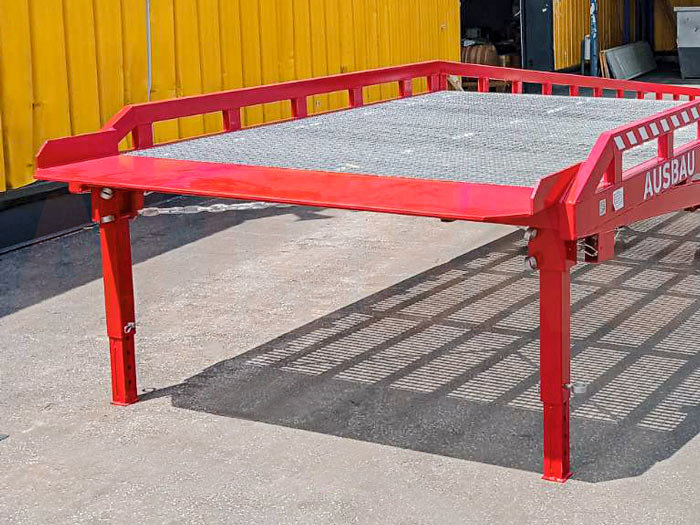
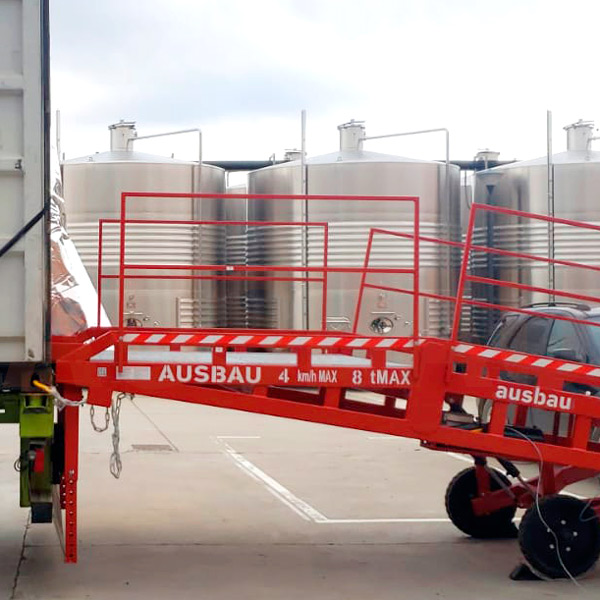
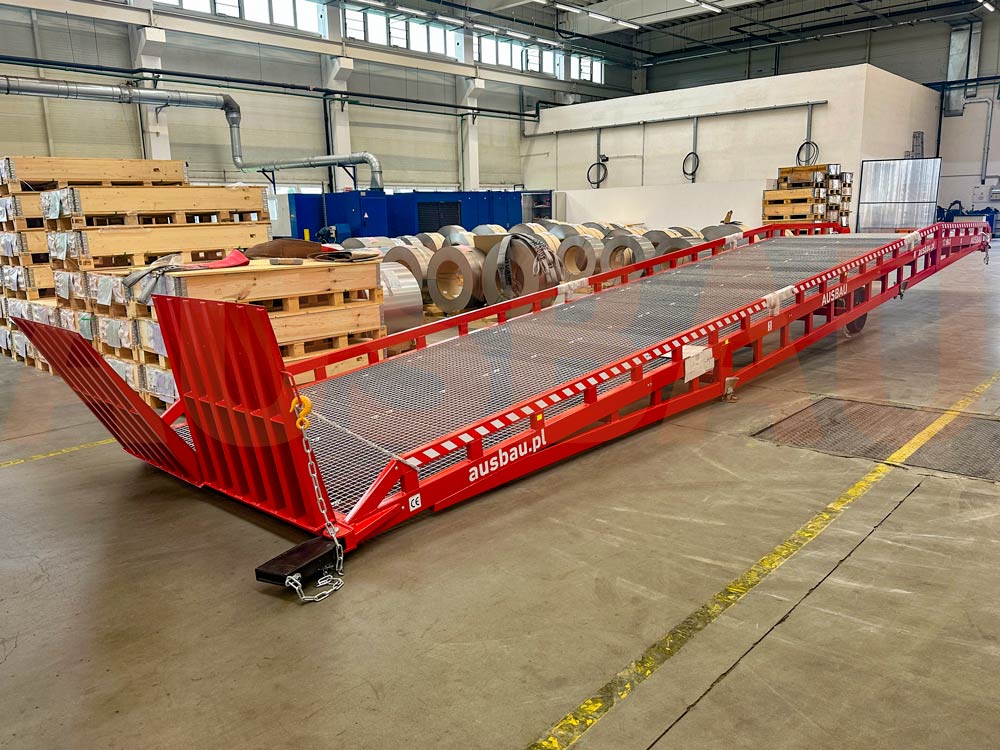
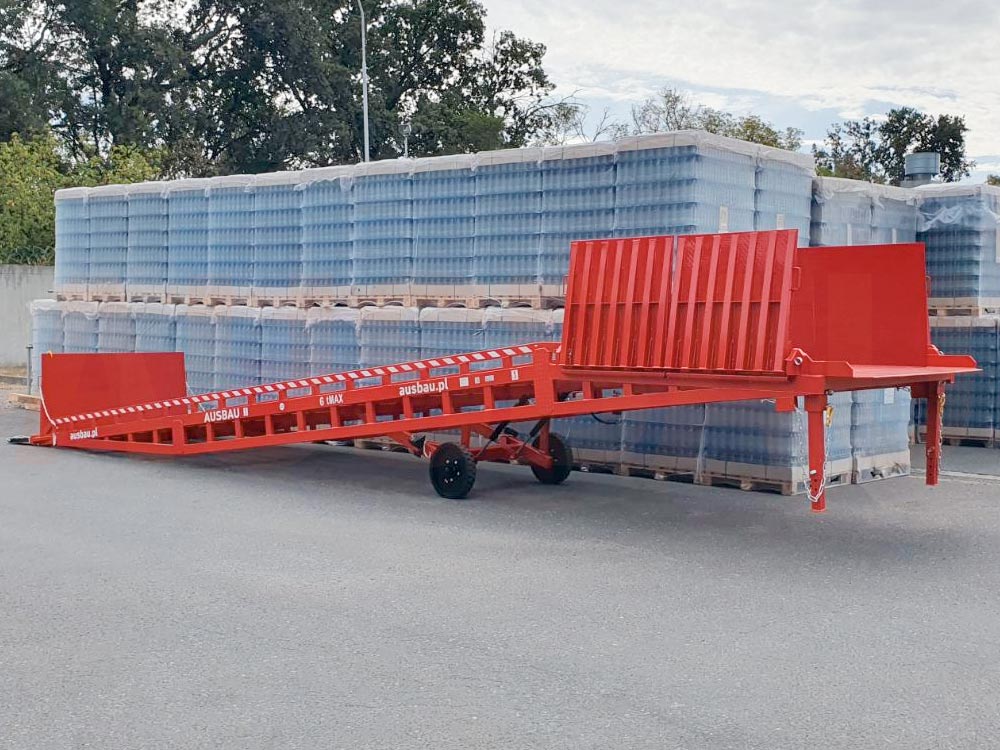
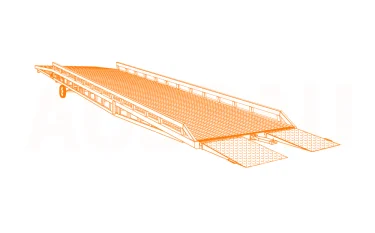
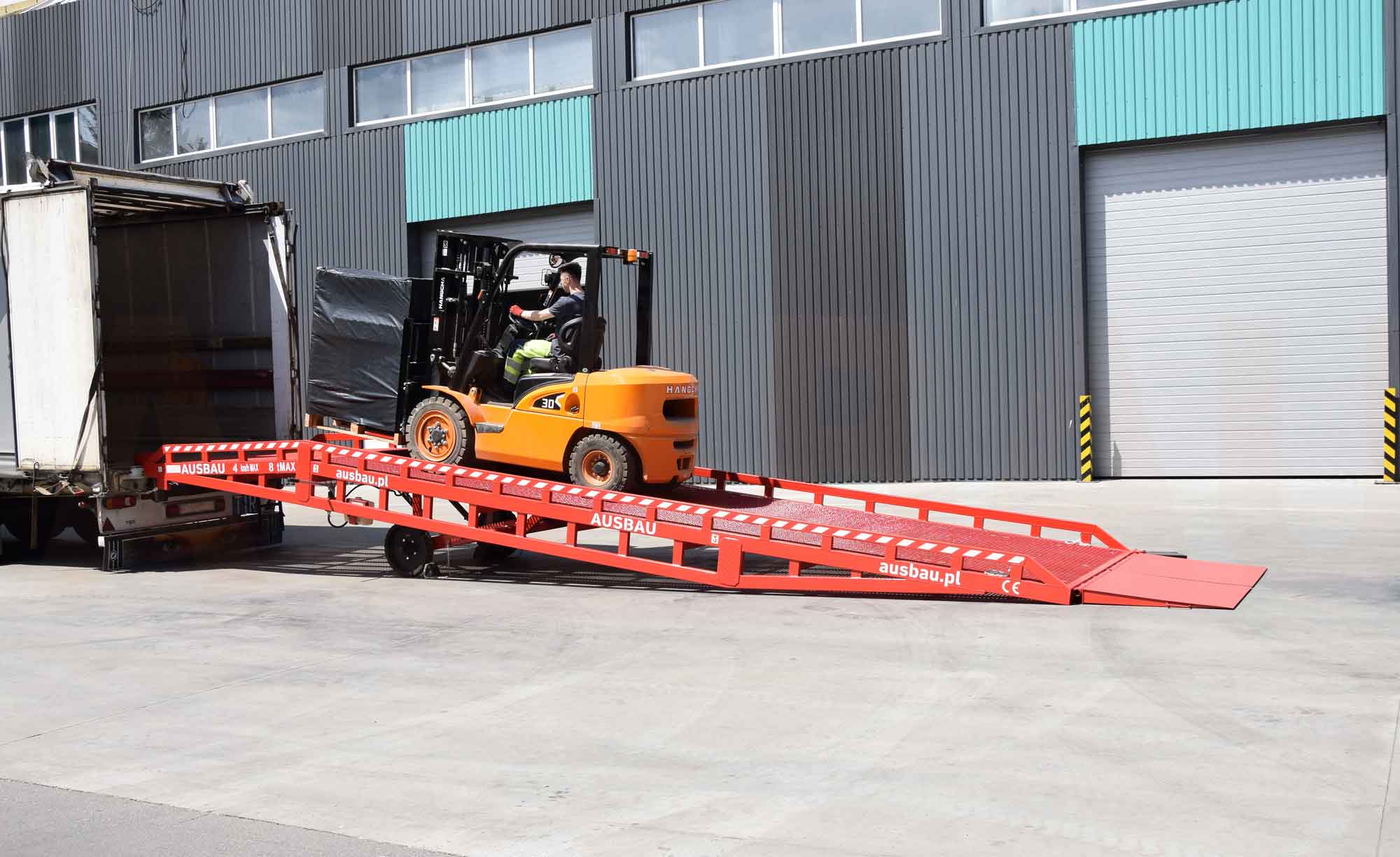
Mobile ramp (mobile loading ramp) AUSBAU – metal construction in the form of an inclined platform, which balances out the difference between ground/warehouse surface and truck body. It significantly speeds up unloading and loading processes in the warehouse.

CE Standard.

Mobile loading ramp allow you to significantly speed up the process of goods loading and unloading at the warehouse. Unlike stationary dock ramps, you can freely move them around the warehouse and far beyond with the help of the built-in transport base, which is a significant advantage.

Our company has a variety of mobile ramp models, with a load capacity of 6, 8, 10 and 12 tons. Besides, we can create a customized loading ramp of any load capacity. Low price and high quality are the distinctive features of our products.

TECHNICAL CHARACTERISTICS

Load on ramp, kg 6000 / 8000 / 10000 / 12000
Total length, mm 9000 / 9500 / 10500 / 11200 / 12000 / 13000
Total width, mm 2220 / 2260 / 2300 / 2340
Usable width, mm 2000
Length of inclined part, mm 8000 / 8500 / 9200 / 9900
Connecting lip length, mm 300
Min. working height, mm 900
Max. working height, mm 1750
Height of side protection, mm 180
Number of folding bridges, pcs 2
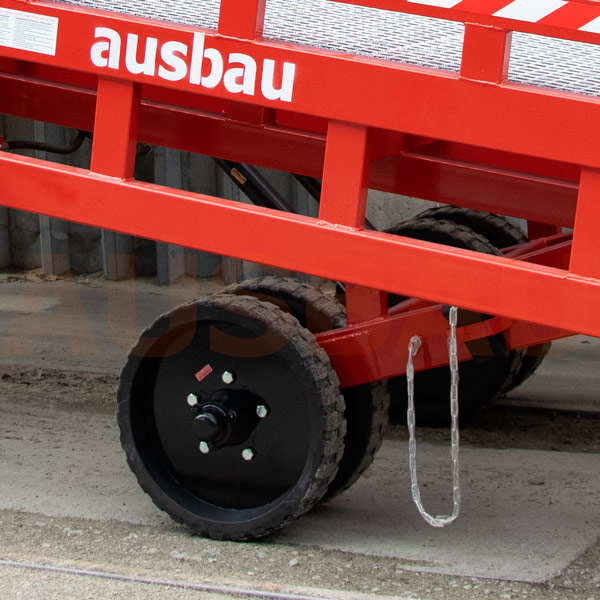
Number of wheels, pcs 2
Wheels solid rubber
Material S235
Riding surface zinc-coated anti-slip grating
Complete set rubber wheel chocks – 2 pcs, tow pole – 1 pc, set of securing chains, manual hydraulic pump with handle – 1 pc.
Warranty 18 months

MODELS AND DIMENSIONS

AUSBAU

# Model Load capacity, kg Ramp dimensions, mm
N H E C NH F T A Z
1 PRO6 6000 8000 2500 1000 300 10500 2000 2220 900 1650
2 PRO8 8000 8000 2500 1000 300 10500 2000 2260 900 1650
3 PRO10 10000 8500 2700 1000 300 11200 2000 2300 900 1650
4 PRO12 12000 8500 2700 1000 300 11200 2000 2340 900 1650
5 SRT6 6000 8000 1000 1000 300 9000 2000 2220 900 1550
6 SRT8 8000 8000 1000 1000 300 9000 2000 2260 900 1550
7 SRT10 10000 8500 1000 1000 300 9500 2000 2300 900 1570
8 SRT12 12000 8500 1000 1000 300 9500 2000 2340 900 1570
9 LNG6 6000 9200 2800 1000 300 12000 2000 2220 900 1700
10 LNG8 8000 9200 2800 1000 300 12000 2000 2260 900 1700
11 LNG10 10000 9900 3100 1000 300 13000 2000 2300 900 1750
12 LNG12 12000 9900 3100 1000 300 13000 2000 2340 900 1750

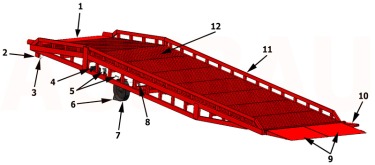
BASIC EQUIPMENT OF MOBILE RAMPS

AUSBAU mobile ramp

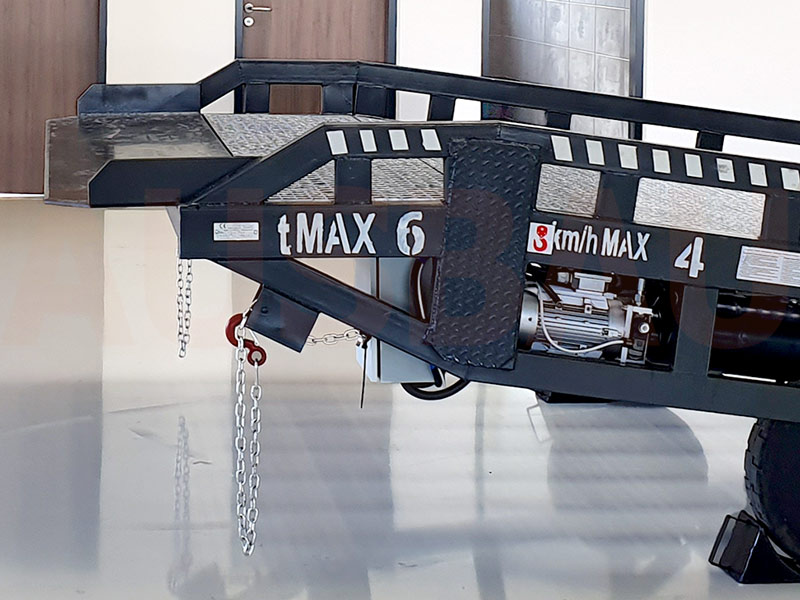
  1. Strong connecting lip
  2. Chain fixation device
  3. Chain with hook
  4. Oil tank
  5. Pump with a handle
  6. Wheel chocks
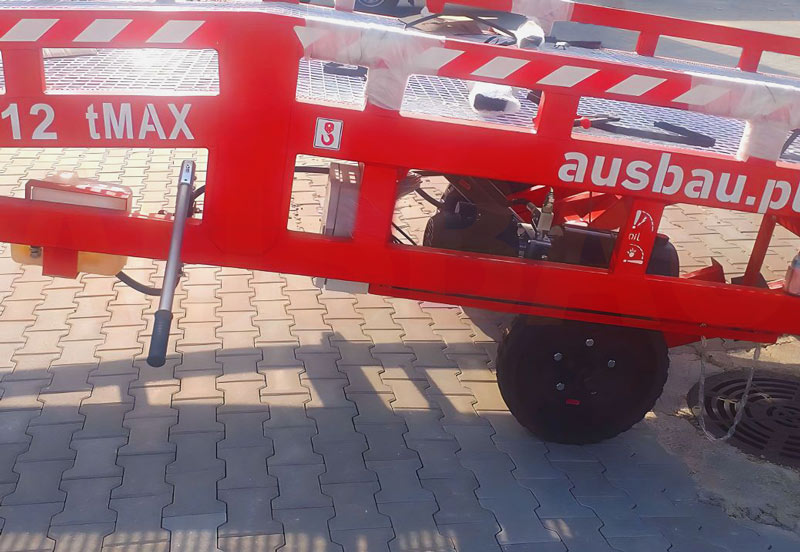
  1. Wheels
  2. Hydraulic cylinders
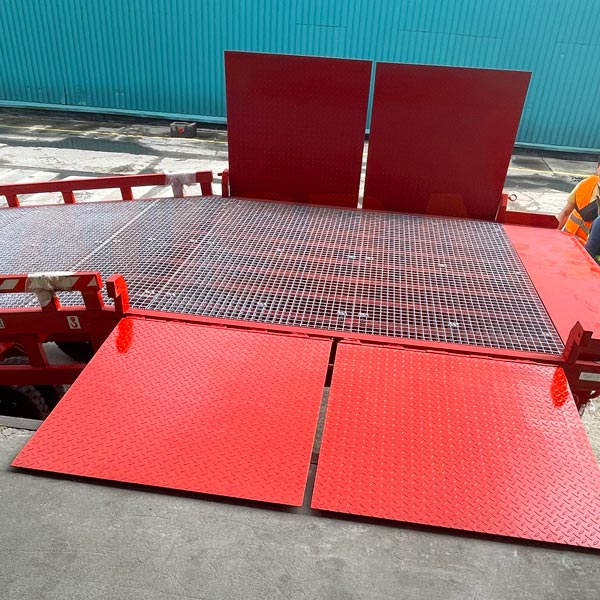
  3. Entry bridges
  4. Tow pole for ramp moving
  5. Safety railings
  6. Riding surface


MOVABLE DOCK RAMP OPERATING PRINCIPLE

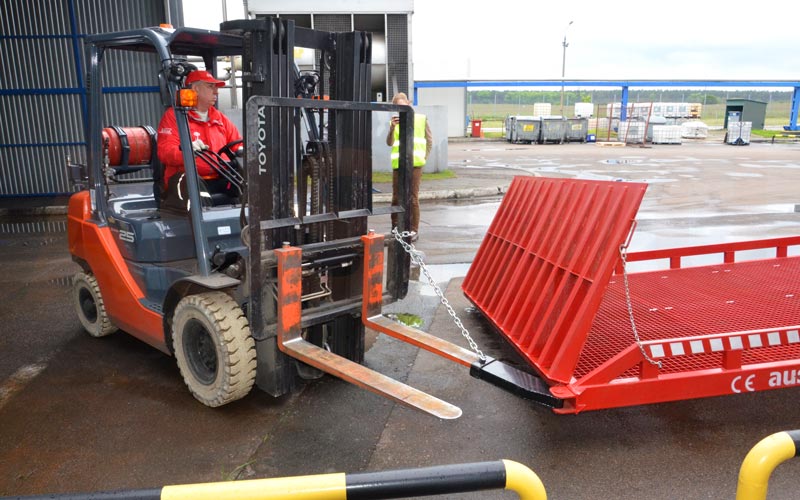
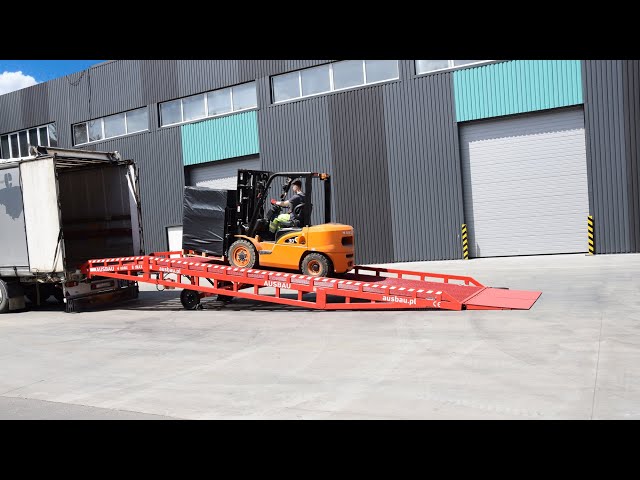
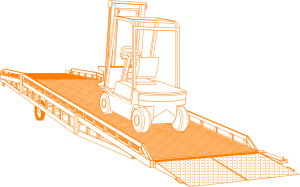
The forklift lifts the edge of the ramp (there is a special place for a rigid coupling grasp) and brings it to the truck. Using manual hydraulics, one person presses the hydraulic pump handle and sets the required height of the ramp (from 900 mm to 1,650 mm).

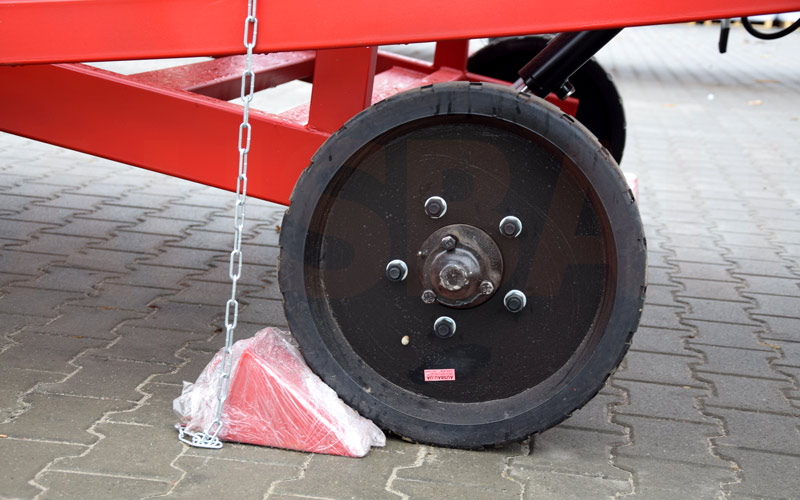
After installation, the mobile loading ramp is securely fastened to the truck with two chains, and the wheels are fixed by chocks (chains and wheel chocks come complete with a ramp). Then the loaded forklift comes up the mobile ramp and goes directly into the truck or container.

Thus, one forklift driver is enough to carry out all loading and unloading operations. So you don’t need the worker who used to pull the loads with a trolley from/to the edge of the truck.

As a result, our mobile loading ramp significantly speeds up the loading and unloading processes, saves labor costs, optimizes logistic processes and increases profits.
AUSBAU-EHP
OPT-EHP - electric hydraulic station instead of manual.
AUSBAU-EMHP
OPT-EHMP - electric hydraulic station and manual pump.
AUSBAU-4WL
OPT-4WL - additional pair of wheels.
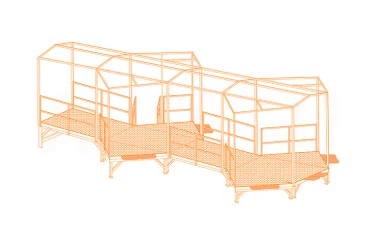
OPT-2SL3SW - three-sided unloading mobile ramp. Supplied with safety legs.
AUSBAU-TC
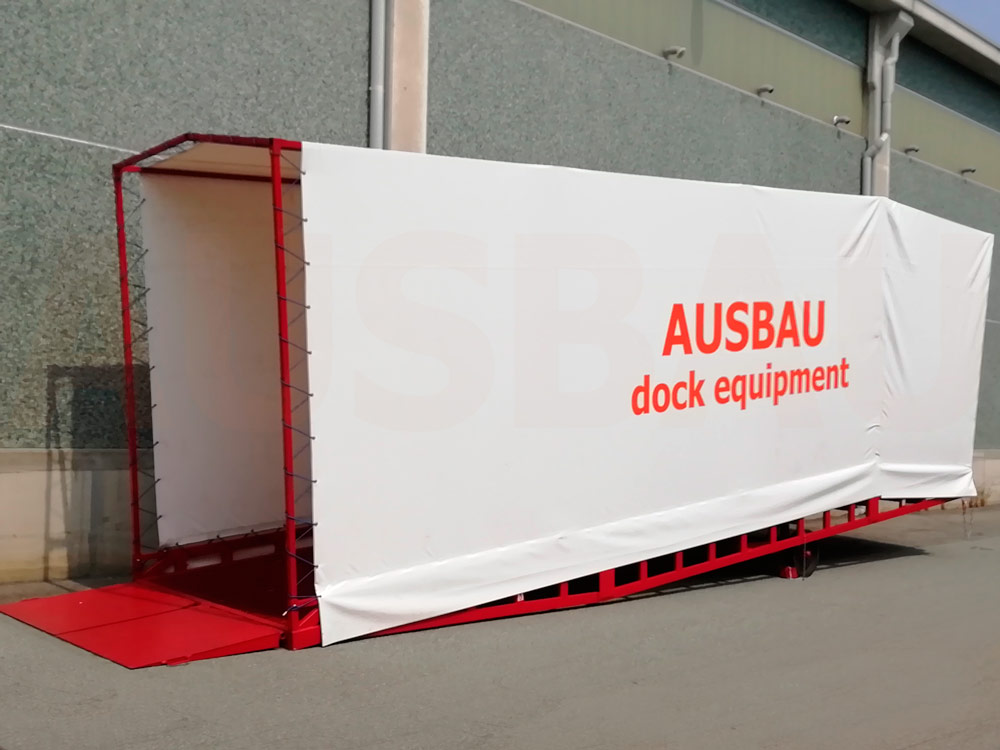
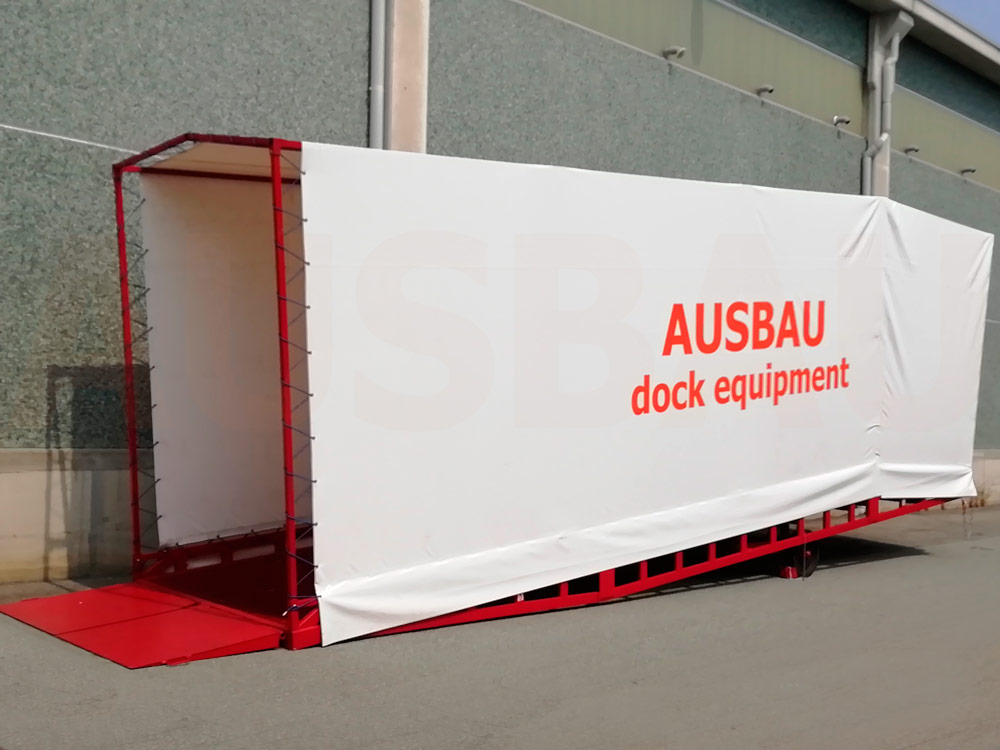
OPT-TC - tent сover over the ramp, mountable.
OPT-2SL - safety legs adjustable in height, increase safety.
AUSBAU-HR
OPT-HR - additional protective hand railings, mountable.
AUSBAU-CLR
OPT-CLR - different color.
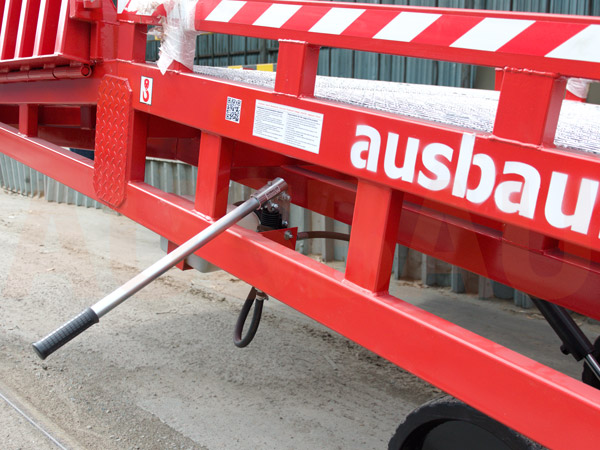
Pump with a handle AUSBAU
The mobile ramp height adjustment is carried out with the help of reliable hydraulics i.e. external power supply is not required.
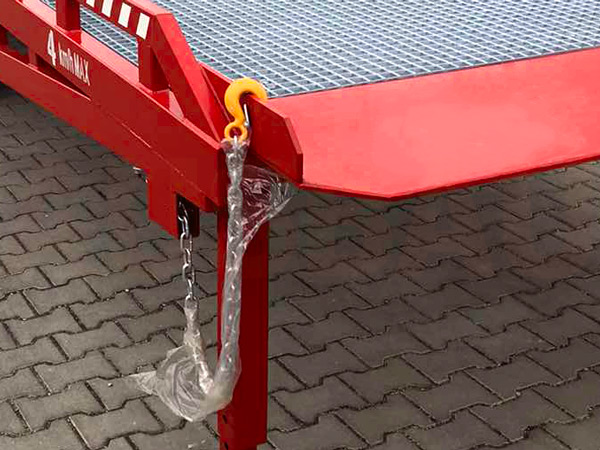
Chain with hook AUSBAU
The chain reliably connects the ramp to all kinds of trucks.
Wheel chocks AUSBAU
The wheel chock (brake) fixes the ramp while the loader is working on it. It comes complete with a ramp.
AV-MR-SG-ZSRS-2000x1000-40х3
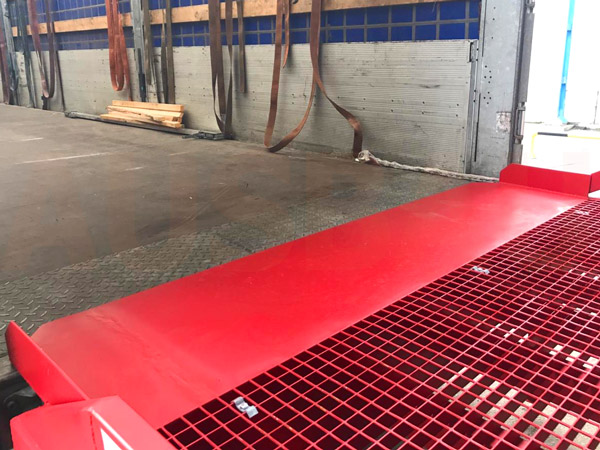
The grid surface of the ramp provides excellent wheel grip, even in severe frosts. Water, dirt, snow and other substances freely seep through the grid holes, so nothing impedes the loader movement.
Tow pole for ramp moving AUSBAU
The forklift can transport the mobile ramp both forward and backward as it features a special attachment for a rigid coupling even in a small warehouse area.
Strong connecting lip AUSBAU
The entry bridge (the point where the ramp and the truck contact) is made of an strengthened plate which is up to 20 mm thick. It ensures outstanding reliability the intensive use requires.

You can see more photos in the gallery

FAQ

1. What is a loading ramp?
A mobile loading ramp is a metal construction that allows a forklift to safely drive up from the ground level into a truck body, van, 20- and 40-foot container, or railway wagon without the need for a stationary dock ramp. Depending on the model, the working height of AUSBAU ramps is adjusted in the range from 900 to 1750 mm, which allows serving most types of transport.

AUSBAU mobile ramps are used for loading operations with trucks, light commercial vehicles (LCV), containers, and railway wagons in places where there is no fixed loading ramp or dock leveller. Standard models are manufactured with a load capacity of 6, 8, 10, and 12 tons, whilst ramps with load capacities of up to 50 tons are manufactured for non-standard applications.

2. What are the different types of loading ramps?
Loading ramps differ in design, installation method, and application. Each type of ramp is designed to solve specific logistics tasks – loading and unloading trucks, containers, light commercial vehicles (LCV), or creating a permanent warehouse loading area.

The main types are:
  • mobile ramps – provide flexibility and can be quickly moved between loading areas, allowing you to work in different places without being tied to a fixed site;
  • mobile ramps for containers – used to work with 20- and 40-foot containers placed on container trailers or long platforms;
  • mobile and fixed ramps for vans and light commercial vehicles – designed for loading and unloading vehicles with a low body height when a standard ramp does not fit the working height;
  • loading ramps for forklift – for companies with a permanent loading area and high work intensity;
  • custom solutions – manufactured according to the required load capacity, dimensions, type of transport, and operating conditions.
3. What is the height of a mobile ramp for trucks and containers?
The working height of a mobile ramp is chosen depending on the vehicle's body height. It determines the height at which the ramp connects to the truck body and ensures a safe entry for the forklift.

When choosing, the following values are usually considered:
  • low-bed trailers – 900-1000 mm;
  • standard trucks and curtain-sided trucks – about 1200 mm;
  • 20- and 40-foot containers on chassis – about 1300 mm;
  • railcars – 1250-1400 mm for the 1st level, 2950 mm for the 2nd level.

If the ramp is used for different types of transport, the adjustment range must cover their minimum and maximum heights. AUSBAU mobile loading ramps for trucks and containers have a hydraulic working height adjustment of 900-1750 mm, which allows working with most types of transport.

4. What is the standard width of a mobile ramp?
The width of a mobile forklift ramp is determined by the dimensions of the forklift, the size of the transported cargo, and the required side clearance for the safe movement of equipment. The standard usable width of AUSBAU mobile ramps is 2000 mm. It is suitable for most forklifts, electric forklifts, stackers, and other warehouse equipment used in typical loading and unloading operations.

When choosing the width, you should consider:
  • the overall width of the forklift;
  • the width of the cargo and forklift attachments;
  • sufficient side clearance on each side of the forklift for safe movement;
  • the ability to drive straight and adjust the movement trajectory.

For large warehouse, construction, or special equipment, AUSBAU can manufacture a ramp with an increased usable width of up to 2820 mm.
5. What are the standards for loading ramp?
Loading ramps must meet the requirements for strength, stability, and operational safety. All models of AUSBAU loading ramps for containers and trucks are equipped with:
  • a strong steel construction designed for the specified load capacity;
  • an zinc-coated anti-slip grating surface for reliable wheel grip;
  • entry bridges for smooth and safe forklift access from the ground level;
  • a connecting lip for reliable connection of the ramp to the vehicle body;
  • safety railings to prevent equipment from driving off;
  • securing chains and wheel chocks to securely fix the ramp;
  • a hydraulic system for smooth working height adjustment;
  • optimal usable width and slope for safe forklift movement;
  • a tow pole for safely moving the ramp around the facility.

For additional safety, AUSBAU ramps can be equipped with protective hand railings, adjustable safety legs, and other protective elements depending on the operating conditions.
6. How to calculate the required load capacity of a loading dock ramp?
The load capacity of a mobile yard ramp is determined by the total weight of the forklift and the transported cargo. When choosing, it is also recommended to consider a safety margin of at least 10% and the possible replacement of warehouse equipment in the future.

For example, if a forklift weighs 4 tons, the maximum cargo weight is 2 tons, and the safety margin is 10%, the recommended ramp load capacity will be at least 7-8 tons. In this case, the optimal choice would be a mobile yard ramp with a load capacity of 8 tons.

Standard AUSBAU mobile ramps are produced with a load capacity of 6, 8, 10, and 12 tons, and for non-standard tasks, models up to 50 tons are manufactured.

7. What is the maximum slope for a forklift ramp?
The slope of a forklift ramp must ensure safe entry for a forklift, both loaded and empty. A loaded forklift usually has better tire traction with the ramp surface, while an empty one may have less, so both operating modes must be considered.

When choosing the slope the following factors are considered:
  • the type and ground clearance of the equipment or transport, as well as other technical characteristics of the vehicles moving along the ramp;
  • the maximum permissible incline specified by the manufacturer of the forklift or other equipment;
  • the type, weight, and stability of the transported cargo;
  • the operating conditions of the ramp, particularly the surface on which it will be placed.

For long, heavy, or unstable cargo, a smoother incline is recommended. When working outdoors, weather conditions are also taken into account: at low temperatures, tire traction can decrease, and driving up steep inclines increases tire wear. To protect the working area from precipitation, an AUSBAU mobile ramp can be additionally equipped with a tent cover, making loading and unloading operations outdoors safer and more comfortable.

When designing AUSBAU mobile loading ramps, the characteristics of the forklift and the cargo, as well as the specific operating conditions, are taken into account, which allows you to choose the optimal ramp model.

Ask a question
Please fill out the form or send a request to mail@av-exim.com

    Subscribe to the newsletter
    Ask a question
    Please fill out the form or send a request to mail@av-exim.com

      Subscribe to the newsletter
      Ask a question
      Please fill out the form or send a request to mail@av-exim.com

        Subscribe to the newsletter