WORKING TIME
Mon-Fri: 08:00-17:00

Custom mobile ramp

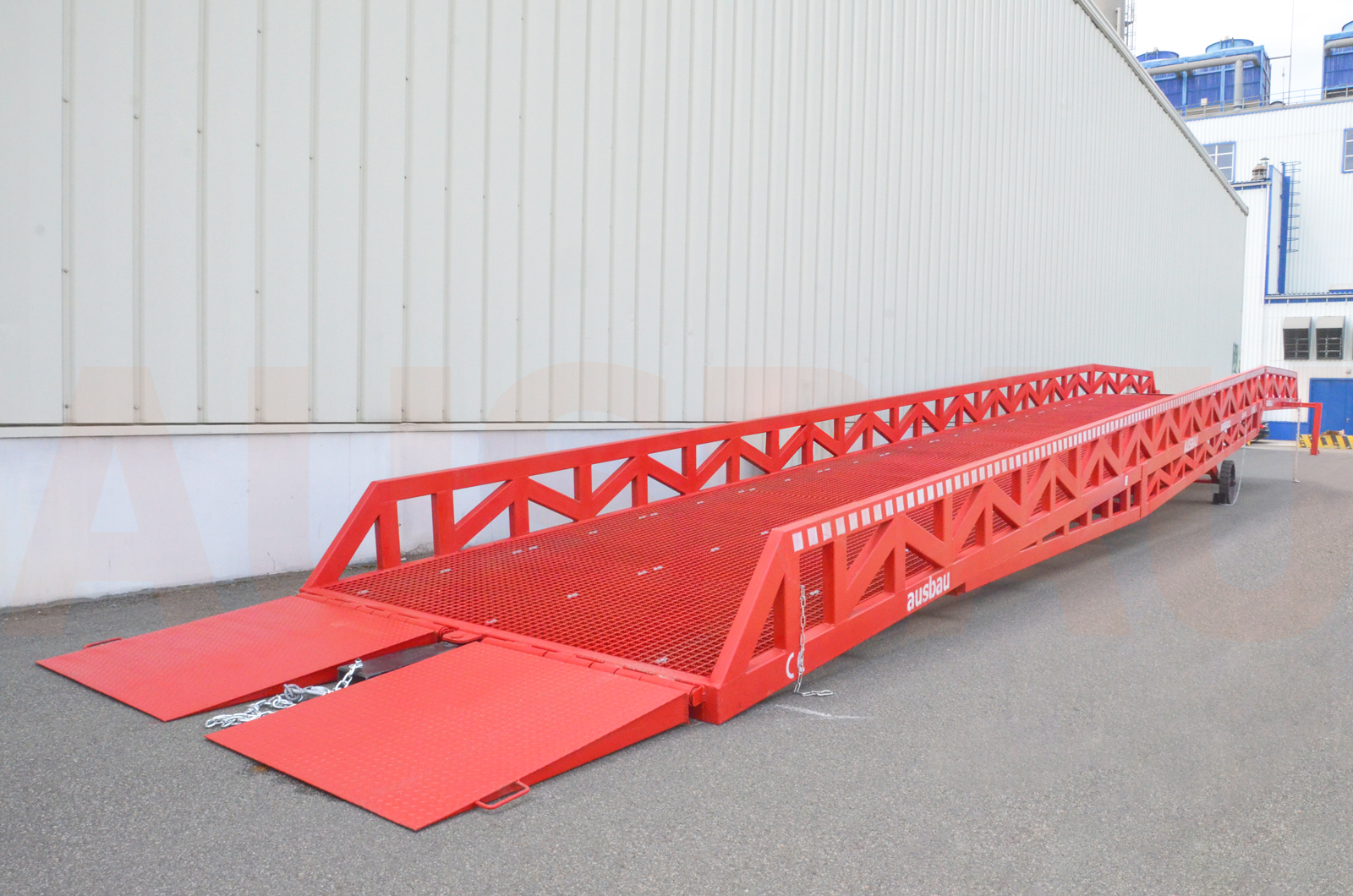
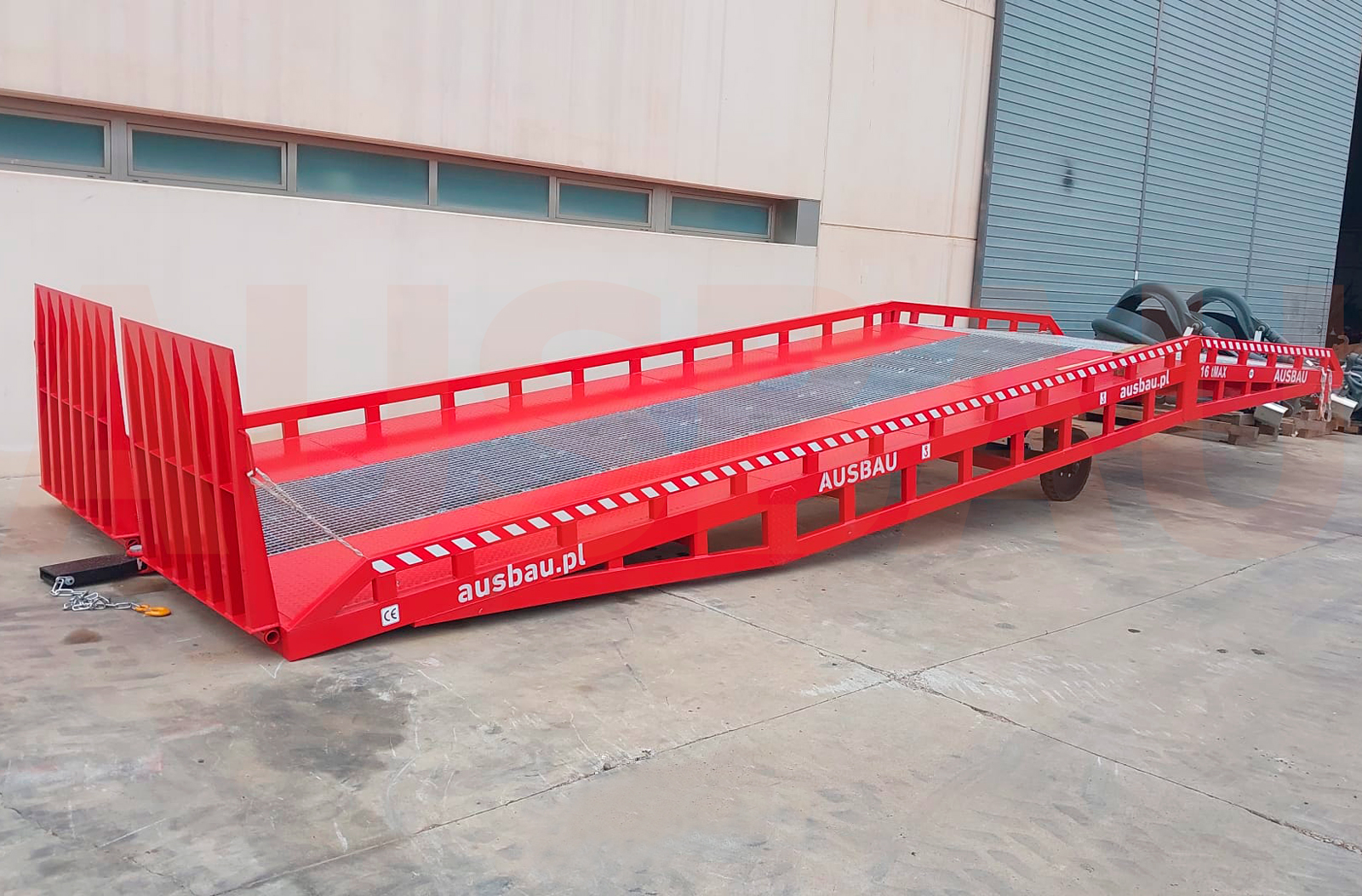
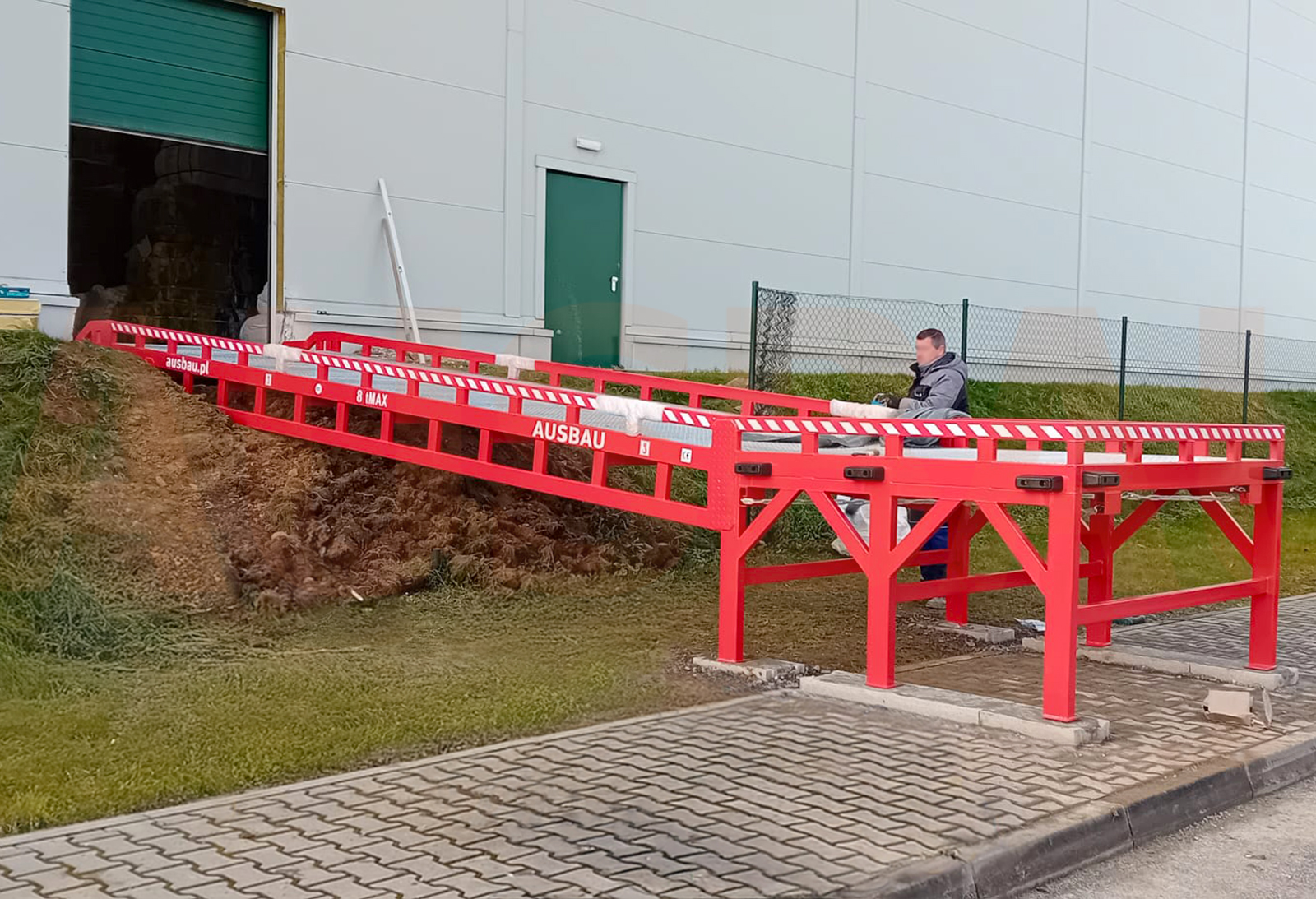
Besides standard ramp models (6, 8, 10 and 12 tons), our customers can order unique bespoke mobile ramps of individual sizes and characteristics. Especially for such orders, our designers and engineers recalculate the load limits. They develop new drawings, taking into account the ramp operating surface, increase the ramp’s width, change the minimum and maximum height levels, and strengthen the wheels.

Our company guarantees high-quality of AUSBAU loading ramps and confidence that your investment will last.

CE Standard.

MOBILE RAMP

Technical characteristics
Load on ramp, kg up to 50 000
Total length, mm customized
Total width, mm customized
Usable width, mm customized
Length of inclined part, mm customized
Connecting lip length, mm customized
Working height range, mm customized
Height of side protection, mm 180
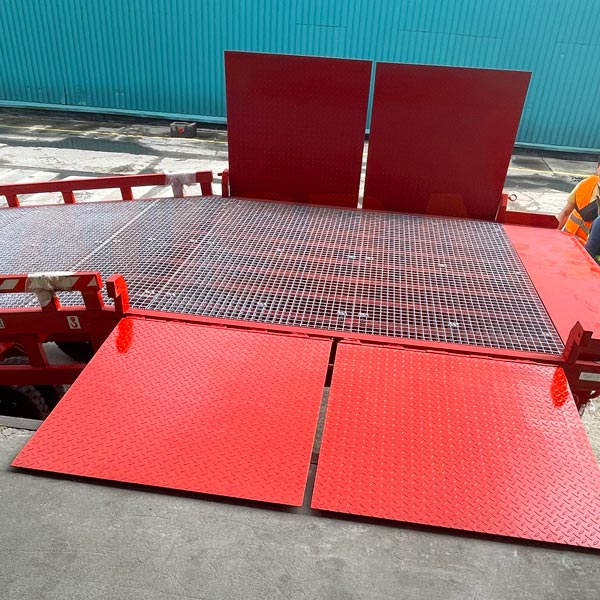
Number of folding bridges, pcs 2
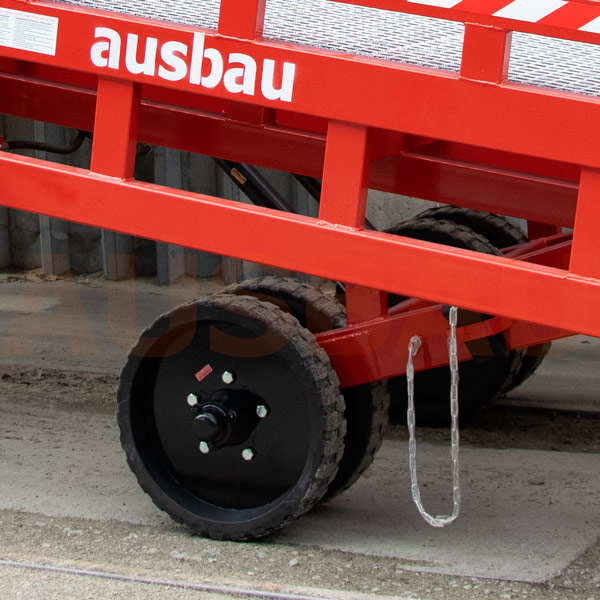
Number of wheels, pcs 2/4
Wheels solid rubber
Material S235
Riding surface zinc-coated anti-skid grating / lentil sheeting / other
Complete set according to customer requirements
Warranty 18 months
Movable dock ramp operating principle

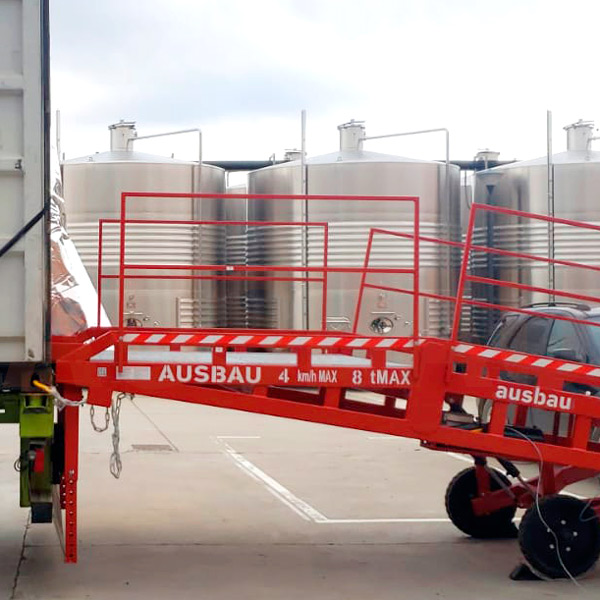
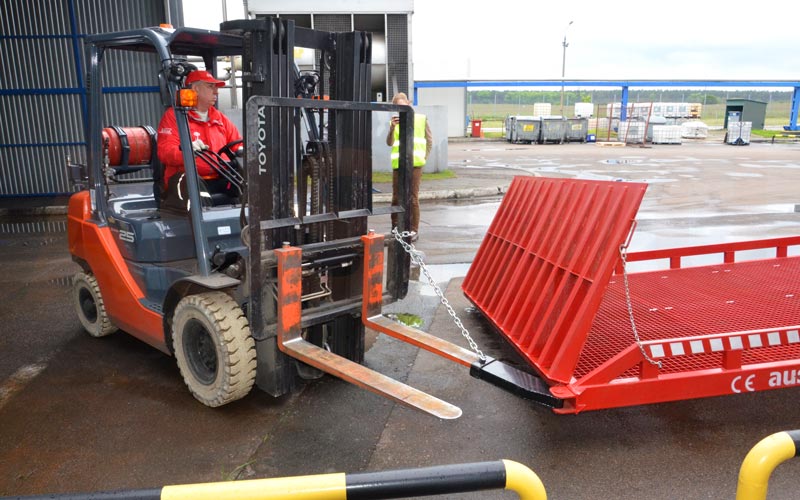
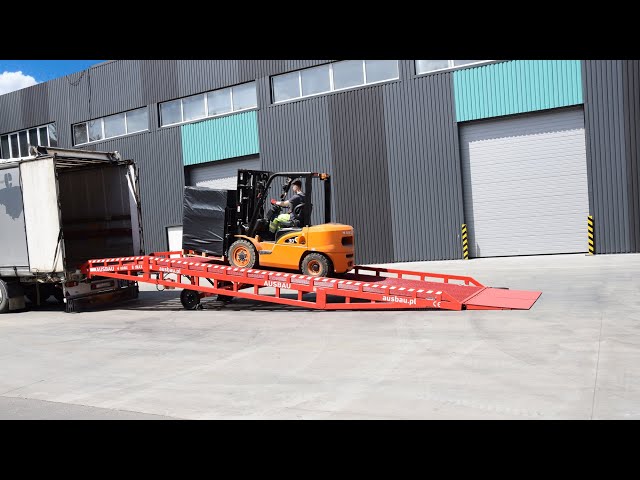
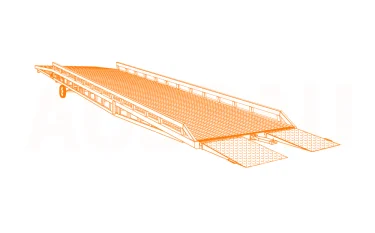
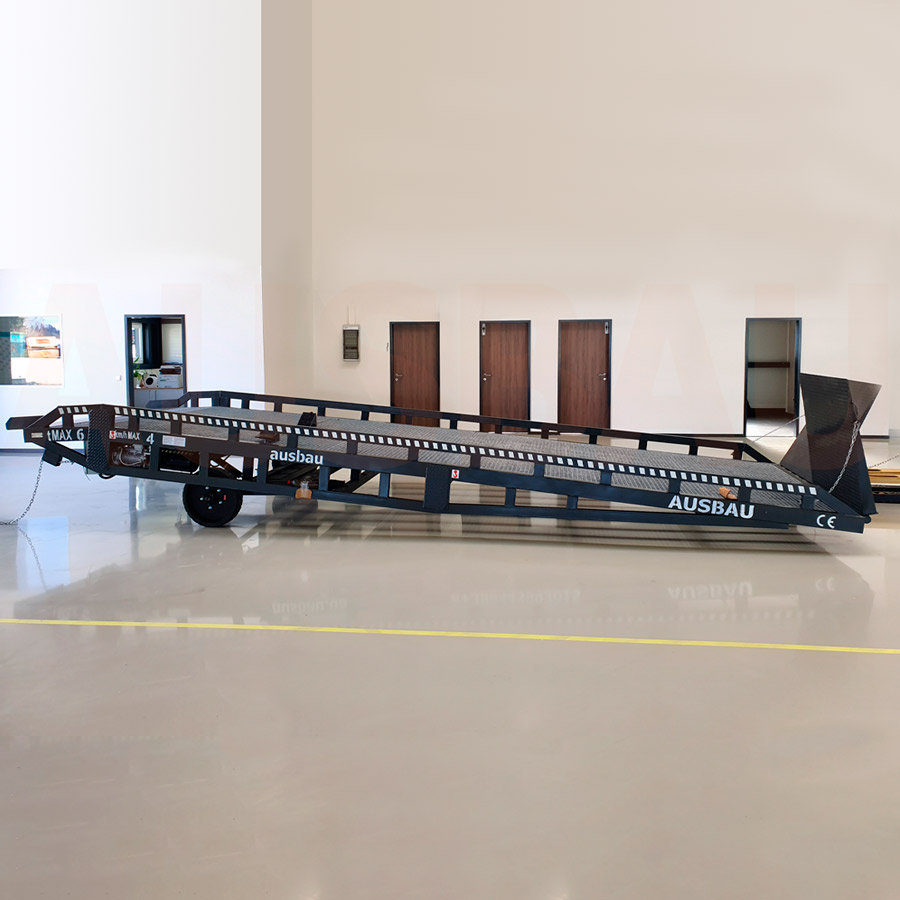
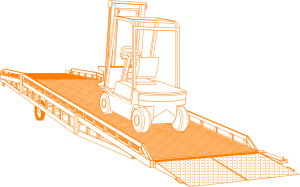
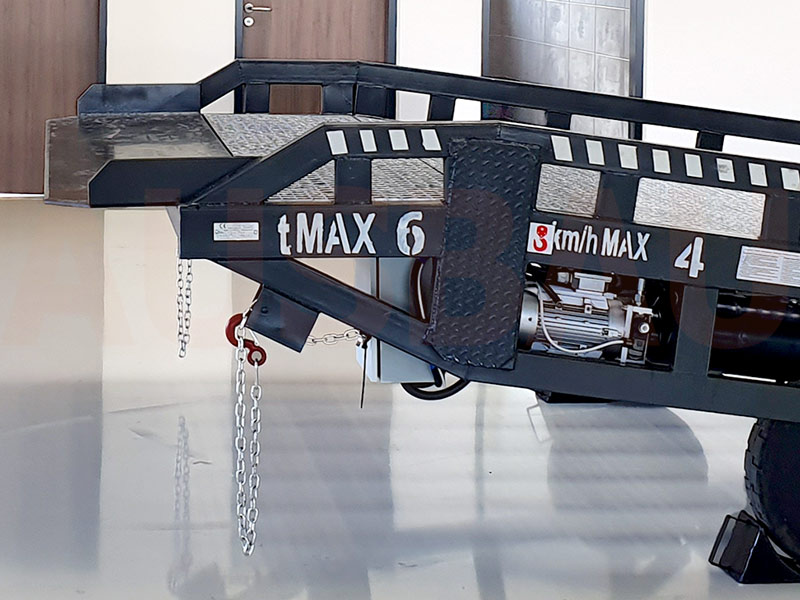
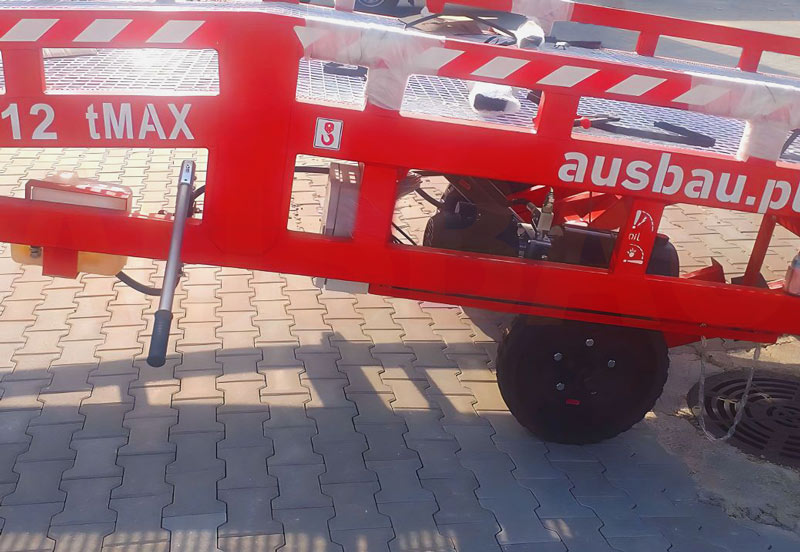
The mobile ramp is used in warehouses for unloading/loading vehicles with the possibility of adjusting the height of the ramp itself. The main advantage of the mobile ramp is its mobility. The ramp can be easily moved with a forklift between unloading points or to any other place on the facility where logistics processes take place.
AUSBAU-EHP
OPT-EHP - electric hydraulic station instead of manual.
AUSBAU-EMHP
OPT-EHMP - electric hydraulic station and manual pump.
AUSBAU-4WL
OPT-4WL - additional pair of wheels.
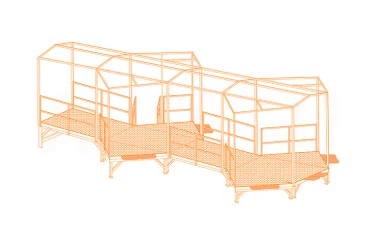
OPT-2SL3SW - three-sided unloading mobile ramp. Supplied with safety legs.
AUSBAU-TC
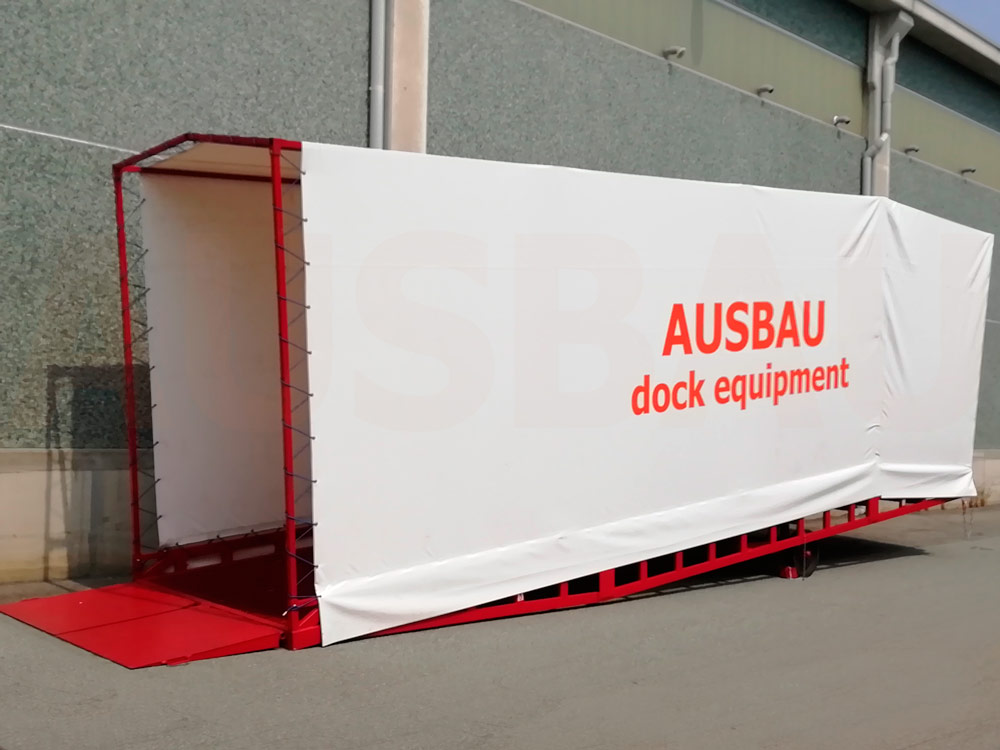
OPT-TC - tent сover over the ramp, mountable.
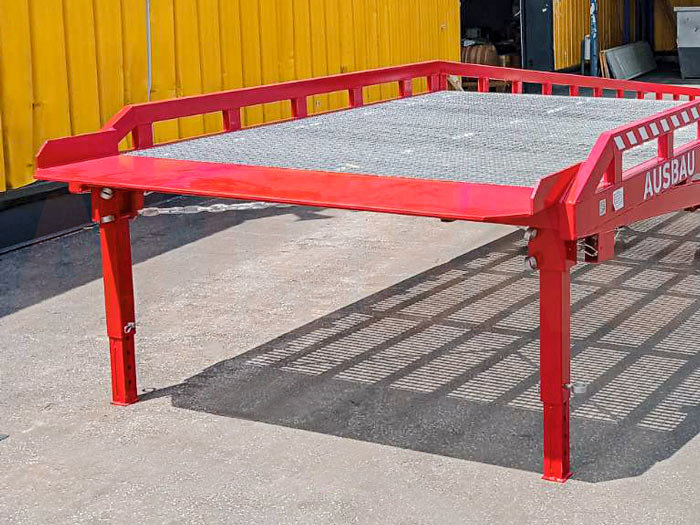
OPT-2SL - safety legs adjustable in height, increase safety.
AUSBAU-HR
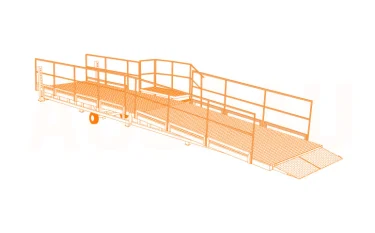
OPT-HR - additional protective hand railings, mountable.
AUSBAU-CLR
OPT-CLR - different color.
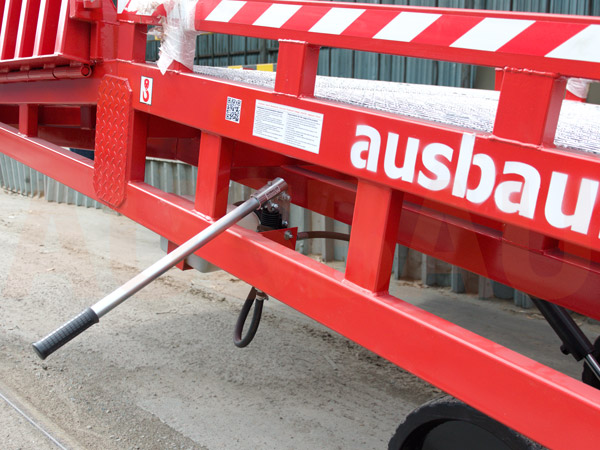
Pump with a handle AUSBAU
The mobile ramp height adjustment is carried out with the help of reliable hydraulics i.e. external power supply is not required.
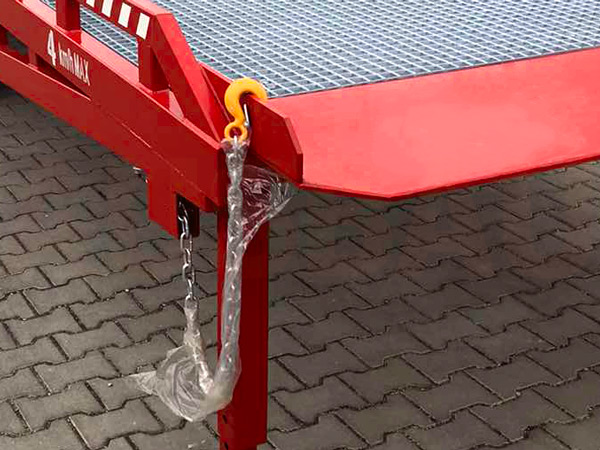
Chain with hook AUSBAU
The chain reliably connects the ramp to all kinds of trucks.
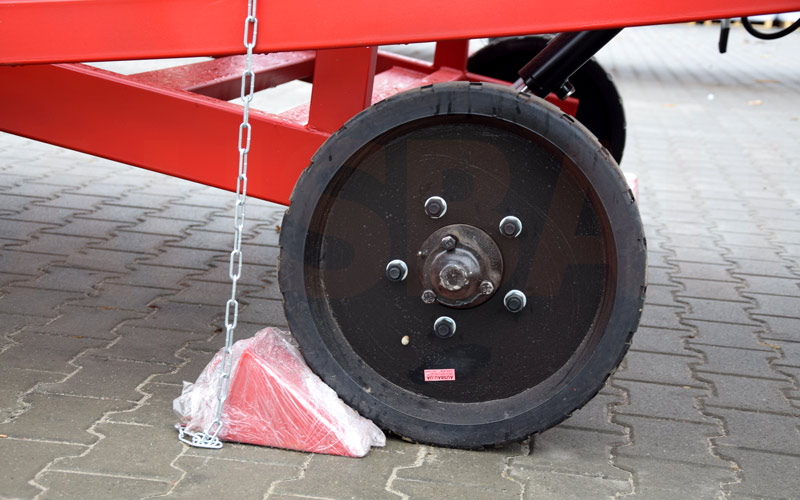
Wheel chocks AUSBAU
The wheel chock (brake) fixes the ramp while the loader is working on it. It comes complete with a ramp.
AV-MR-SG-ZSRS-2000x1000-40х3
The grid surface of the ramp provides excellent wheel grip, even in severe frosts. Water, dirt, snow and other substances freely seep through the grid holes, so nothing impedes the loader movement.
Tow pole for ramp moving AUSBAU
The forklift can transport the mobile ramp both forward and backward as it features a special attachment for a rigid coupling even in a small warehouse area.
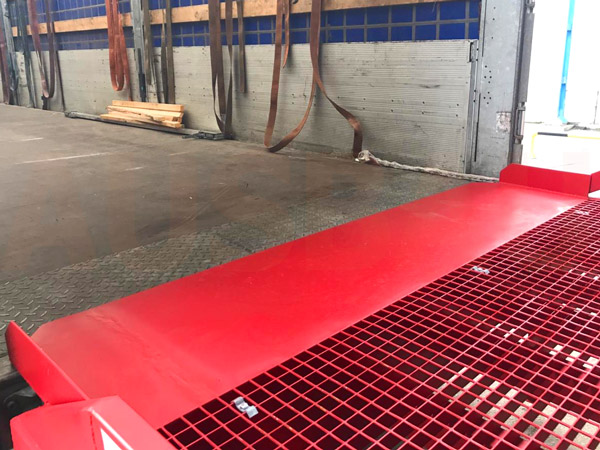
Strong connecting lip AUSBAU
The entry bridge (the point where the ramp and the truck contact) is made of an strengthened plate which is up to 20 mm thick. It ensures outstanding reliability the intensive use requires.

You can see more photos in the gallery

FAQ

1. What is a loading ramp used for?
A loading ramp is used to organize loading and unloading operations in cases where warehouse equipment needs to overcome the height difference between working levels.

Depending on the design, the ramp allows for:
  • loading and unloading trucks, semi-trailers, and containers;
  • organizing the movement of forklifts, electric forklifts, and stackers between the warehouse and ground level;
  • working with transport of various heights;
  • servicing non-standard, heavy, or oversized equipment;
  • organizing a permanent or temporary loading zone.

For non-standard tasks, the mobile ramp design can be adapted in terms of dimensions, working height, load capacity, and configuration for specific equipment and the operating conditions of the enterprise.

2. How to choose a loading ramp?
When choosing a loading ramp, it is necessary to consider not only its dimensions but also the parameters of the equipment, transport, and cargo.

Main criteria:
  • load capacity – determined taking into account the weight of the forklift and the maximum weight of the transported cargo, plus a 10% safety margin;
  • working height – must correspond to the height of the truck body, container, or loading platform;
  • usable width – selected taking into account the dimensions of the equipment and the cargo planned to be unloaded/loaded, as well as the required side clearance;
  • length and slope angle – must ensure the safe entry of equipment, taking into account its clearance and permissible slope;
  • type of construction – mobile, stationary, container, or special design ramp;
  • operating conditions – work intensity, condition of the unloading/loading area (evenness/unevenness of the surface where the equipment is installed), indoor or outdoor operation.

If a standard model does not meet one or more parameters, AUSBAU can develop a mobile loading ramp with custom dimensions, load capacity, and design for specific operating conditions.
3. Is it possible to manufacture a mobile ramp based on the customer’s specifications?
Yes. AUSBAU can develop a mobile loading ramp based on the customer's drawings, sketches, or technical specifications. Before manufacturing, the designers verify the initial data, perform the necessary calculations, and adapt the design to the type of equipment, cargo characteristics, work intensity, and operating conditions.

For each non-standard project, a set of production drawings is developed, according to which the loading ramp is manufactured. If the drawings provided by the customer lack the necessary calculations or do not meet safety requirements, the AUSBAU design department refines the project and provides a technically sound solution.

4. What is the maximum load that the loading ramp can bear?
The maximum permissible load capacity of a loading ramp is determined not only by the weight of the cargo but also by the total weight of the forklift and the transported cargo, as well as the load distribution on the ramp structure.

When designing ramps, the following is taken into account:
  • the weight of the equipment along with the maximum cargo weight;
  • the type and dimensions of the equipment used;
  • the nature and intensity of operation;
  • the required dimensions and design of the ramp.

For non-standard tasks, AUSBAU manufactures mobile ramps with a load capacity of up to 50 tons. For ramps with an increased load capacity, individual calculations and structural reinforcement are performed, taking specific operating conditions into account. Since AUSBAU is a manufacturer, we can fully adapt the ramp design to the required load capacity by modifying the dimensions, load-bearing structure, the number and arrangement of supports, the riding surface, and other elements. This allows us to develop a loading ramp for the specific equipment, cargo, and technological process of the enterprise.
5. How much does a mobile loading ramp cost, and what factors influence the price?
The price of a mobile loading ramp depends not only on the declared load capacity. Cost, reliability, and service life are affected by:
  • length of the ramp – a short structure is cheaper but increases the slope angle and may not be suitable for a specific forklift or other equipment;
  • usable width – a narrow ramp is cheaper but can limit operations with certain forklifts and bulky cargo;
  • riding surface – the quality and type of the grating affect wheel traction, wear, and service life when using various types of equipment;
  • metal structure – metal thickness and the characteristics of the load-bearing frame elements affect the strength and lifespan of the ramp;
  • hydraulic system – the quality of the hydraulics affects reliability and maintenance costs;
  • metal preparation and painting – the quality of the coating determines the structure's protection against corrosion;
  • safety elements and complete set – fasteners, chains, wheel chocks, side barriers, and additional options also affect the price.

Therefore, a low price does not always mean savings. A ramp that is too short or narrow may not fit the existing equipment, and saving on metal, the riding surface, hydraulics, or protective coating can increase repair costs and shorten the service life.

AUSBAU loading ramps are designed for long-term, intensive operation and retain their value over time – even after many years of work, AUSBAU ramps are sold on the secondary market and continue to be used at enterprises.

6. What additional safety features can be fitted to a loading ramp?
Depending on the design of the loading ramp or platform, the equipment used, and the operating conditions, AUSBAU offers a wide selection of additional options that increase the safety and convenience of loading and unloading operations:
  • safety legs – adjustable in height, increase ramp stability and provide additional safety during operation;
  • three-sided unloading mobile ramp with safety legs – allows organizing work from several sides with additional fixation of the structure;
  • additional protective hand railings – increase the safety of employees and pedestrians while staying on the ramp or platform;
  • tent cover over the riding surface – protects the working area from rain, snow, and other precipitation;
  • electric hydraulic station – replaces the manual hydraulic system;
  • electric hydraulic station and manual pump – allow using electric adjustment with backup manual control;
  • additional wheels – used for local moving of the ramp or platform.

Since AUSBAU is a manufacturer, the possibilities are not limited to the standard list of additional options. We can change the design of the mobile ramp, combine various elements and develop individual technical solutions in accordance with the customer's requirements, the equipment used and specific operating conditions.
Ask a question
Please fill out the form or send a request to mail@av-exim.com

    Subscribe to the newsletter
    Ask a question
    Please fill out the form or send a request to mail@av-exim.com

      Subscribe to the newsletter
      Ask a question
      Please fill out the form or send a request to mail@av-exim.com

        Subscribe to the newsletter