WORKING TIME
Mon-Fri: 08:00-17:00

Fixed loading ramp

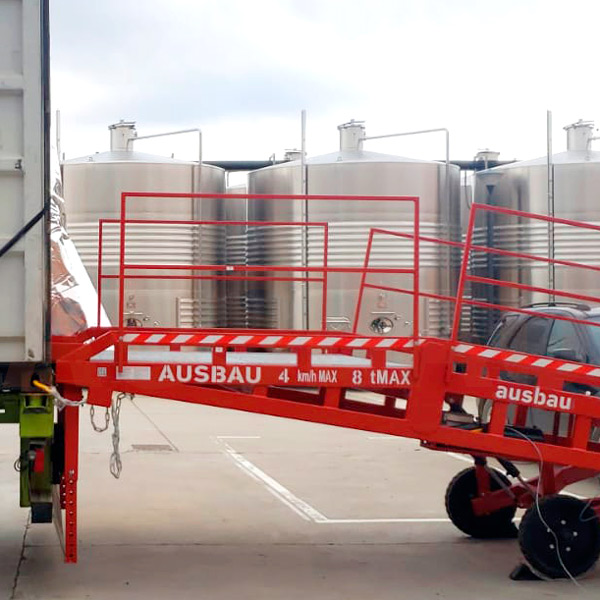
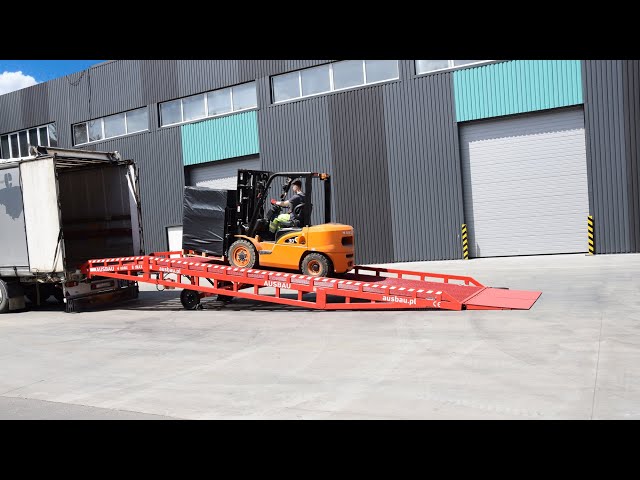
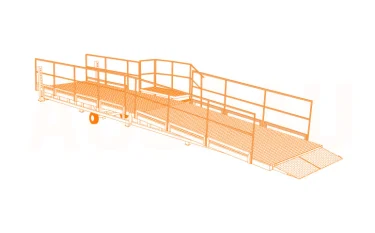
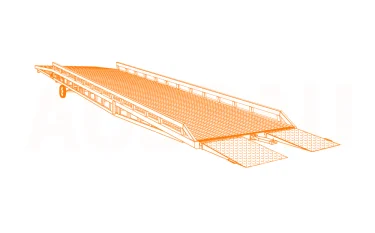
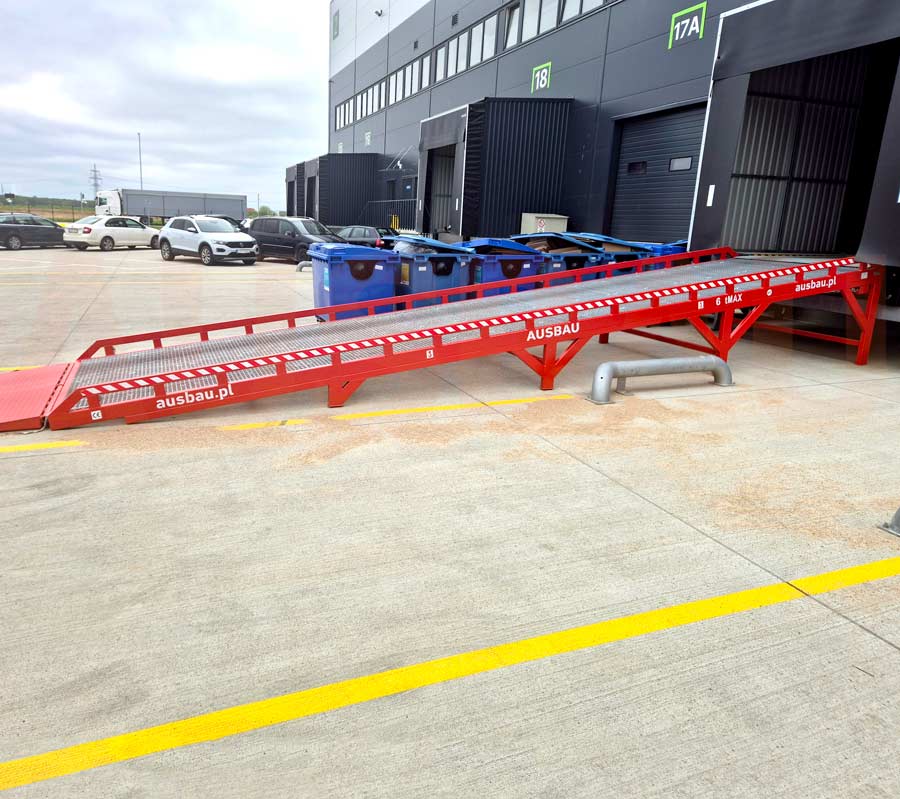
Fixed loading ramp AUSBAU-ST (without horizontal platform) is actively used at enterprises and warehouses with a regular need to transfer goods. They are also essential for warehouses with inconvenient access roads.

You can choose and buy one of the 9 loading ramp models offered by our company. Moreover, we are ready to make a special designed ramp, taking into account the circumstances and characteristics of the customer’s business.

CE Standard.

Technical characteristics
Load on ramp, kg 6000 / 8000 / 10000
Total length, mm 8300 / 10300 / 12300
Total width, mm 2120
Usable width, mm 2000
Length of inclined part, mm 8000 / 10000 / 12000
Connecting lip length, mm 300
Working height, mm 1100 / 1200
Height of side protection, mm 180
Number of folding bridges, pcs 2
Slope angle 5,74 / 6,89 / 8,63
Material S235
Riding surface zinc-coated anti-slip grating
Complete set set of securing chains
Warranty 18 months
Models and dimensions

AUSBAU-ST

# Model Load capacity, kg Ramp dimensions, mm
N C NС F T A a°
1 ST6-80 6000 8000 300 8300 2000 2120 1100/1200 8.63
2 ST6-100 6000 10000 300 10300 2000 2120 1100/1200 6.89
3 ST6-120 6000 12000 300 12300 2000 2120 1100/1200 5.74
4 ST8-80 8000 8000 300 8300 2000 2120 1100/1200 8.63
5 ST8-100 8000 10000 300 10300 2000 2120 1100/1200 6.89
6 ST8-120 8000 12000 300 12300 2000 2120 1100/1200 5.74
7 ST10-80 10000 8000 300 8300 2000 2120 1100/1200 8.63
8 ST10-100 10000 10000 300 10300 2000 2120 1100/1200 6.89
9 ST10-120 10000 12000 300 12300 2000 2120 1100/1200 5.74
Movable dock ramp operating principle

Our loading ramp has a simple construction and is easily fixed with bolts or chains. The load is distributed over several pivots, which makes the ramp reliable and time-proof.

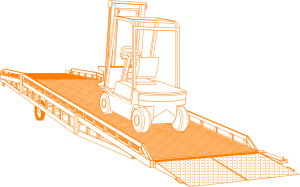
Due to the anti-skid surface forklift or other equipment can freely get over the loading ramp with firm surface adhesion. And safety railings ensure safe movement along the ramp.

Another undoubted advantage of the loading ramps is their relatively low price compared to other capital warehouse facilities.
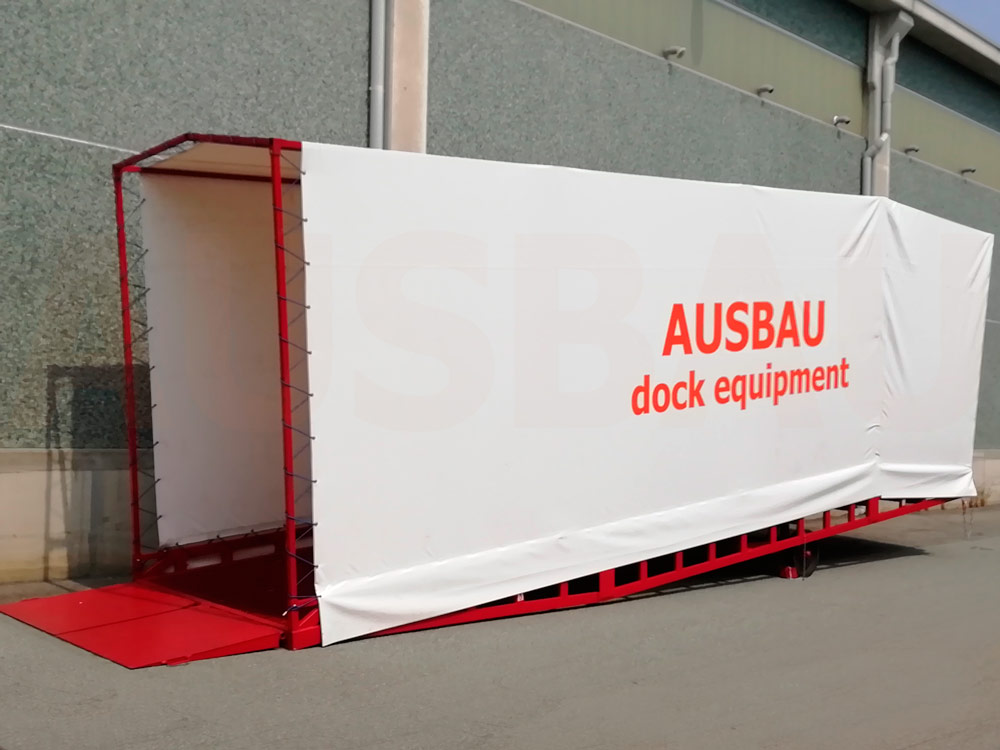
AUSBAU-TC
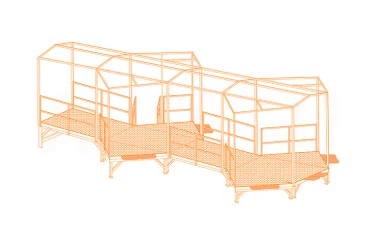
OPT-TC - tent сover over the ramp, mountable.
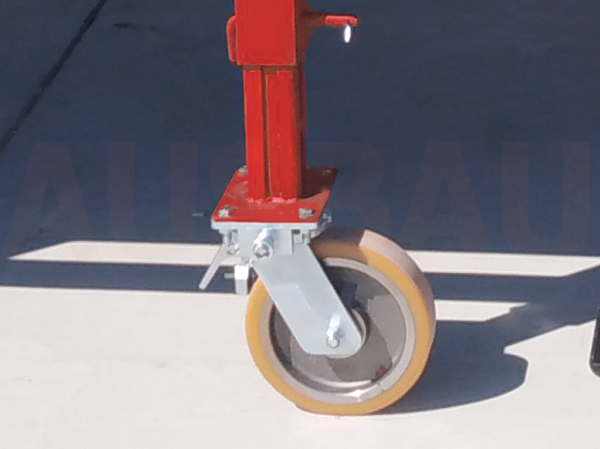
AUSBAU-WL
OPT-WL - pair of wheels for local small moving.
AUSBAU-HA
OPT-HA - height adjustment.
AUSBAU-HR
OPT-HR - additional protective hand railings, mountable.
AUSBAU-CLR
OPT-CLR - different color.

You can see more photos in the gallery

FAQ

1. What is a fixed ramp for warehouse and how is it installed?
A fixed ramp for a forklift is designed to organise a permanent loading and unloading area. It is installed on a prepared solid surface and provides access for loading equipment from the ground level to the vehicle body or loading zone.

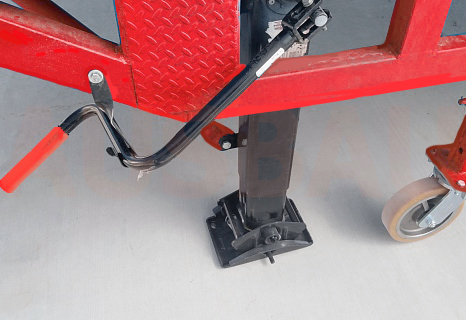
The construction rests on load-bearing supports and is secured in the working position with bolts and securing chains. The installation does not require building a stationary dock ramp or integrating the ramp into the building.

At the same time, the loading dock ramp is not anchored in one place forever. If the logistics scheme changes, it can be dismantled, transported, and installed at another site or facility. For some AUSBAU models, additional wheels are available to simplify the local movement of the fixed loading ramp around the warehouse.

2. What types of ramps are used in warehouses?
Loading ramps for trucks differ in design, working height, and purpose. AUSBAU produces several types:
  • AB-ST – a fixed loading ramp without a horizontal platform for direct forklift access from the ground level to the truck or warehouse;
  • AB-STB – a ramp with a horizontal platform that creates additional space for aligning and maneuvering the forklift before docking;
  • AB-DG "Warehouse-Ground" – ensures the movement of loading equipment between the warehouse level and the adjacent area;
  • AB-VR – a loading dock ramp for vans and LCVs, designed for vehicles with a low body height;
  • loading ramps for agricultural and special equipment – designed taking into account the large dimensions, weight, and specific features of the equipment used;
  • universal ausbau mobile ramp for vans and lcvs – a specially designed model that can be used as a mobile or fixed ramp and work with vehicles of different heights;
  • custom ramps and loading complexes – designed for a specific logistics process and can be combined with platforms and other loading equipment.

The type of fixed ramp is selected based on the transport, loading equipment, height difference, available space, and the loading and unloading operations scheme.
3. What is the load capacity of a loading dock ramp?
When choosing a fixed loading ramp, you should base the load capacity on the heaviest handling equipment that will operate in this area and the maximum weight of the moved cargo. Since a forklift ramps is typically installed for continuous and intensive operation, it is important to consider not only the current equipment, but also a possible increase in the weight of forklifts or loads in the future.

If several forklifts use the same ramp, the calculation is performed using the heaviest combination of equipment and cargo rather than average values. AUSBAU can manufacture a loading ramp for containers or trucks with the required load capacity and, if necessary, reinforce the structure for heavy or special equipment and intensive operating conditions.

4. How to calculate the dimensions of a fixed loading ramp for warehouse?
The dimensions of a forklift ramps are selected as an integrated system: changing one parameter affects the others and impacts the convenience of forklift operation.
  • working height is determined by the body height of the vehicle, warehouse dock, or another fixed docking point;
  • ramp length depends on the height difference, ground clearance, and maximum permissible incline of the loading equipment: the greater the difference, the longer the inclined section must be;
  • usable width is selected based on the dimensions of the forklift and cargo, leaving sufficient side clearance for safe movement;
  • horizontal platform, if required, is calculated taking into account the dimensions of the equipment and cargo, as well as space for alignment and maneuvering, and can be custom-made to individual sizes and requirements;
  • height, width, and length of the structure can also be individually calculated upon request.

For a non-standard site or equipment, the dimensions of an AUSBAU loading ramp can be calculated individually to ensure the structure matches the actual traffic flow of the forklift and the layout of the loading area.
5. What should be the slope of a warehouse forklift ramp?
The incline of a fixed loading ramp depends on the height difference between the platform and the loading point, the ramp length, and the characteristics of the equipment used. It must not exceed the maximum permissible incline established by the forklift manufacturer.

When calculating, the following factors are considered:
  • height difference;
  • evenness of the surface where the ramp will be placed;
  • available length for ramp installation;
  • permissible incline of the forklift/equipment;
  • features of the loading area.

The greater the height difference, the longer the ramp length must be to provide the necessary gradient for safe and comfortable equipment movement. Therefore, the height, length, and incline of a loading ramp are calculated as interrelated parameters.

If the terrain or site configuration does not allow for a standard straight ramp, AUSBAU can design a structure with non-standard geometry. For example, the ramp can consist of several sections with different inclines to match the terrain features and ensure the required forklift movement trajectory.
6. What is the standard for loading ramp?
A fixed loading ramp must feature a robust and stable structure designed for the specified load capacity, secure anchoring, an anti-slip riding surface, lateral protection, and a safe docking zone.

To improve safety, a fixed dock ramp can be additionally equipped with:
  • safety railings – prevent equipment from falling off the ramp;
  • anti-slip decking – improves the traction of forklift wheels on the riding surface;
  • wheel chocks – prevent the spontaneous movement of transport vehicles;
  • stairs or stairs with a platform – ensure safe access for personnel and drivers;
  • a tent cover – protects the working area from precipitation and minimises the risk of slipping;
  • working height adjustment – allows for more precise adaptation of the ramp to the level of the loading zone.

As a manufacturer, AUSBAU can customize the structure and safety elements to suit a specific site, equipment, and the organisation of loading operations.
Ask a question
Please fill out the form or send a request to mail@av-exim.com

    Subscribe to the newsletter
    Ask a question
    Please fill out the form or send a request to mail@av-exim.com

      Subscribe to the newsletter
      Ask a question
      Please fill out the form or send a request to mail@av-exim.com

        Subscribe to the newsletter