WORKING TIME
Mon-Fri: 08:00-17:00

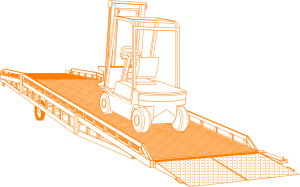
Ramp for vans

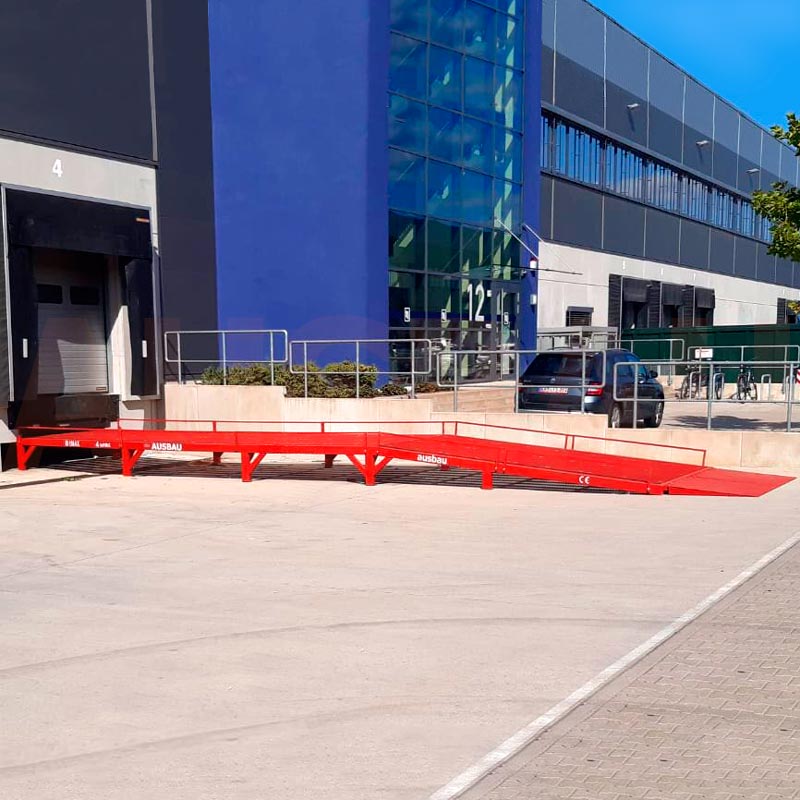
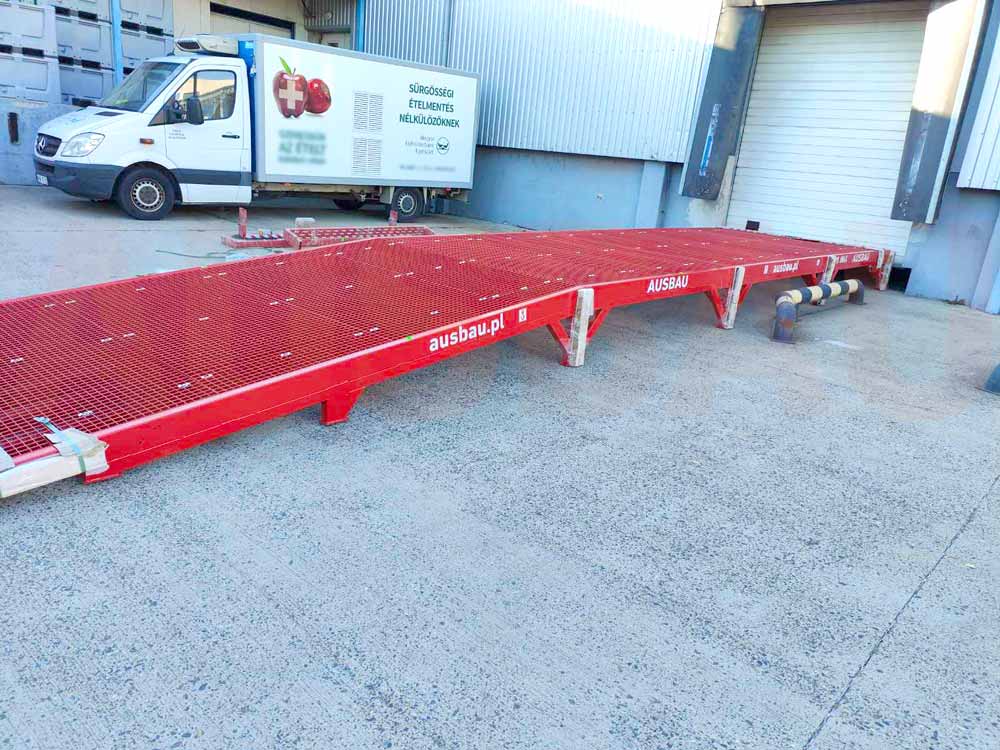
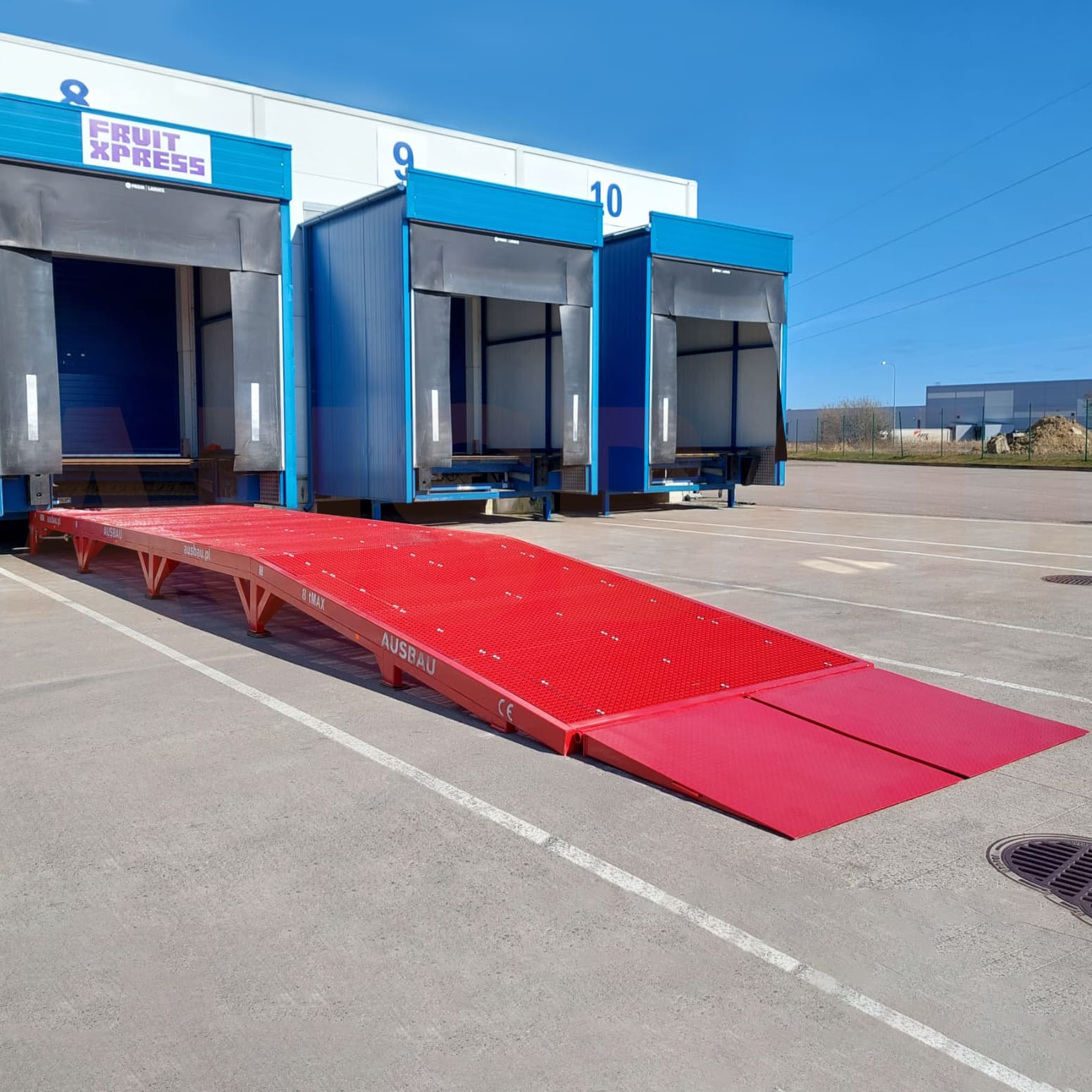
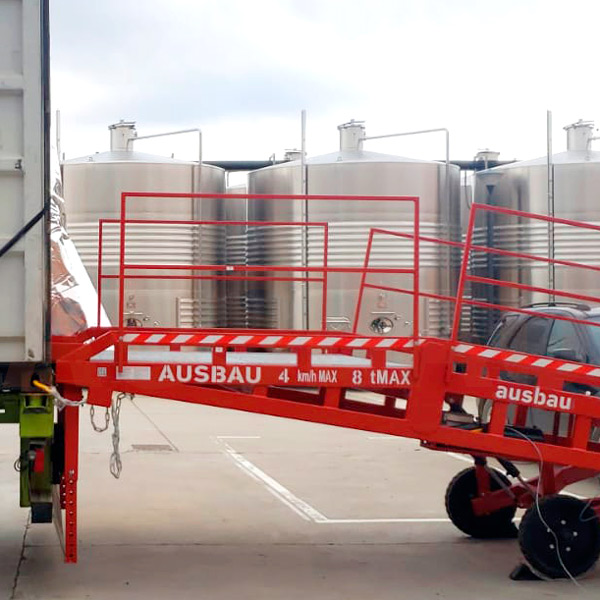
This is special designed truck ramp for loading/unloading commercial vehicles at standard dock gates of modern warehouses.

Our team studied tens of specifications for hundreds of models of commercial vehicles, we analyzed carefully reports about top sales models on European market, our engineers modelled different executions in order to find best choice for different vehicles and here is the result – AUSBAU-VR.

TECHNICAL CHARACTERISTICS

Load on ramp, kg 5000 / 8000
Total length, mm 10000 / 11000 / 12000 / 13000
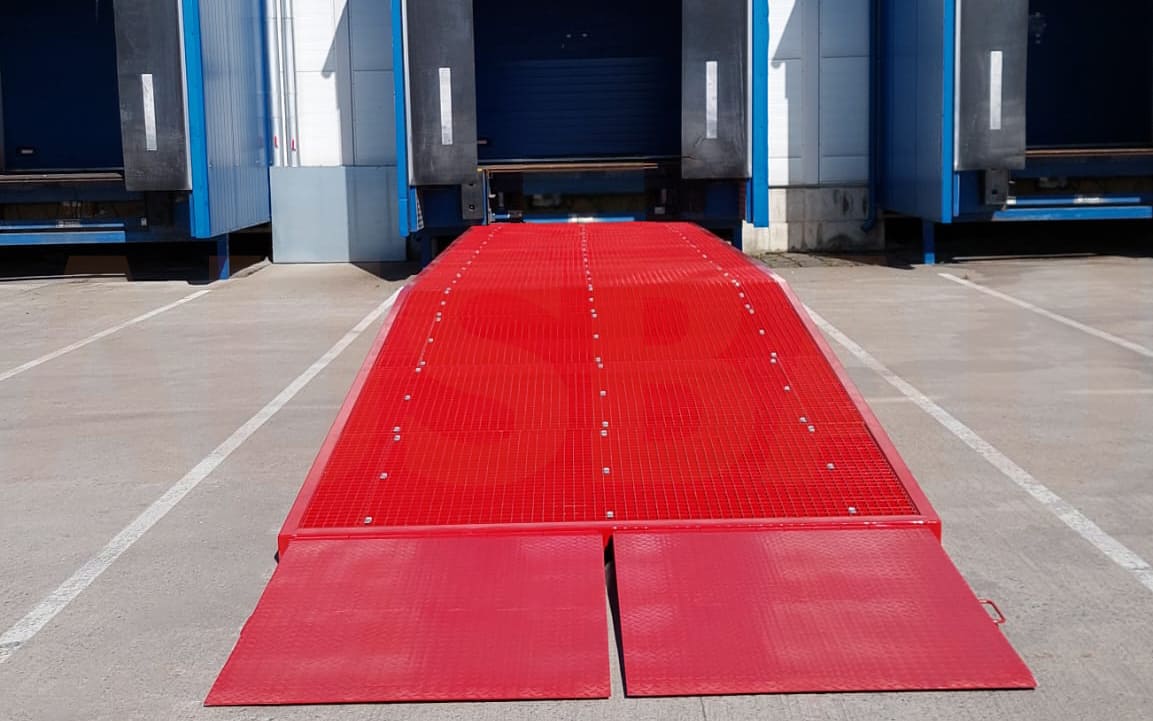
Total width, mm 2450
Usable width, mm 2350
Length of inclined part, mm 4000 / 5000 / 6000
Working height, mm 550 / 600 / 650
Height of side protection, mm 180
Number of folding bridges, pcs 2
Slope angle 5.74 / 6.22 / 6.32 / 8.36
Material S235
Riding surface zinc-coated anti-slip grating
Complete set set of securing chains
Warranty 18 months

MODELS AND DIMENSIONS

AUSBAU-VR

# Model Load capacity, kg Ramp dimensions, mm
N H NH F T A a°
1 VR8-N6000-H7000XF2350-A600 * 8000 6000 7000 13000 2350 2450 600 5.74
2 VR8-N5000-H7000XF2350-A550 8000 5000 7000 12000 2350 2450 550 6.32
3 VR5-N6000-H5000XF2350-A650 5000 6000 5000 11000 2350 2450 650 6.22
4 VR8-N4000-H6000XF2350-A550 ** 8000 4000 6000 10000 2350 2450 550 8.36
5 VR5-N4000-H6000XF2350-A550 ** 5000 4000 6000 10000 2350 2450 550 8.36

* best choice – for all types of commercial vehicles, small and medium.
** the ramp design can be more cost-effective and consist of two parts, each 800 mm wide.

LEVELLING RAMP OPERATING PRINCIPLE

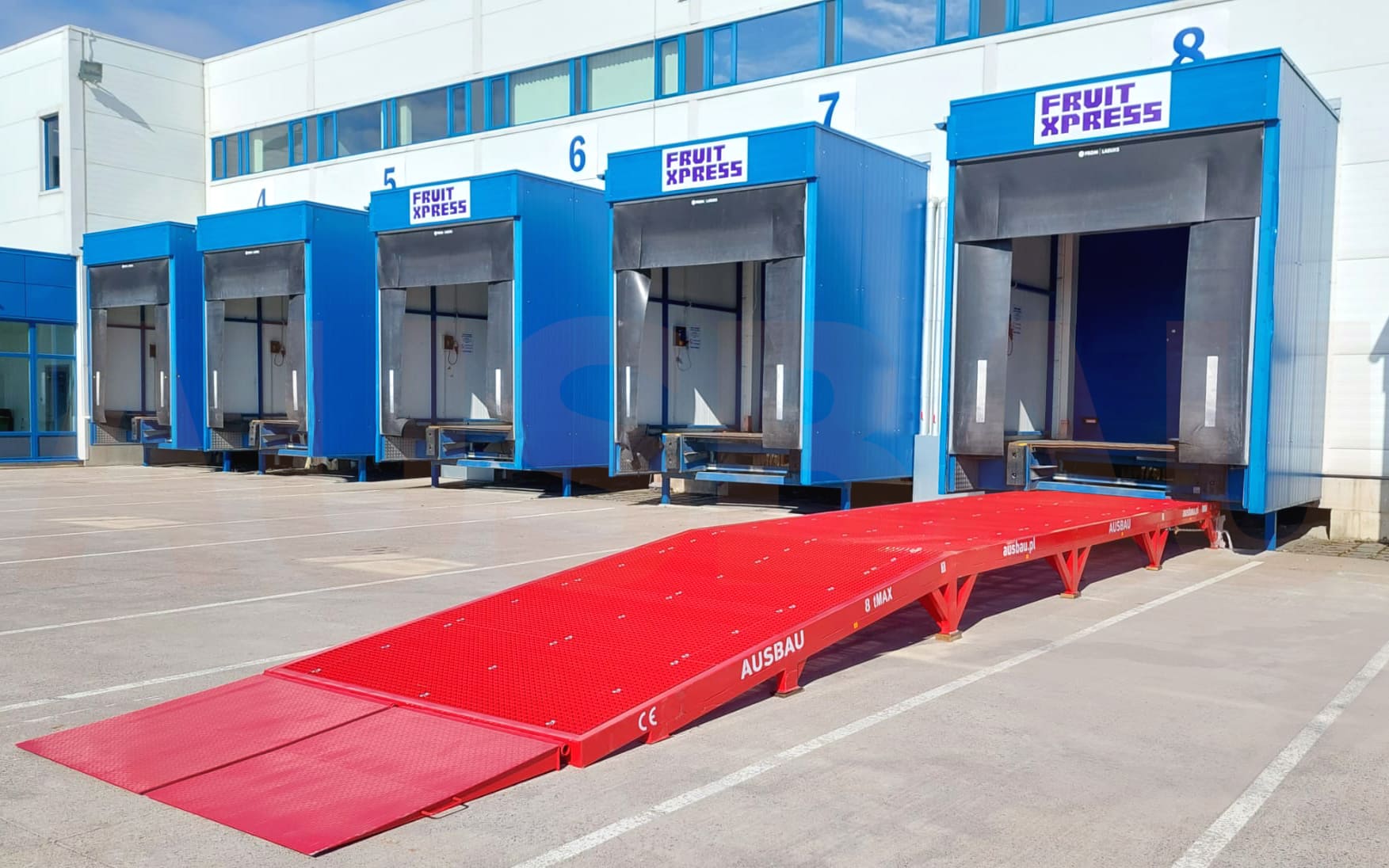
AUSBAU-VR helps to eliminate difference in heights of commercial vehicles (500-700 mm) and height of dock gates, dedicated for big semi-trailers (1100-1200 mm ). Van arrives to the dock gate and after riding on the AUSBAU-VR ramp, it becomes higher, and its loading height (distance from ground to van floor) becomes similar to dock gate height, which allows to make loading/unloading just from warehouse.

Standard set includes steel gratings as riding surface, protective 180 mm safety railings preventing falling van from ramp, kit for fixing ramp to ground and warehouse wall. Besides that customer can order special optional features, which will upgrade his ramp, improve usability and ergonomics of usage, safety of work.
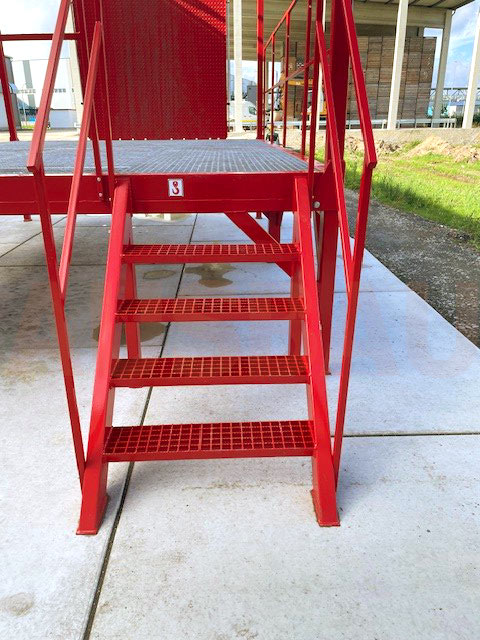
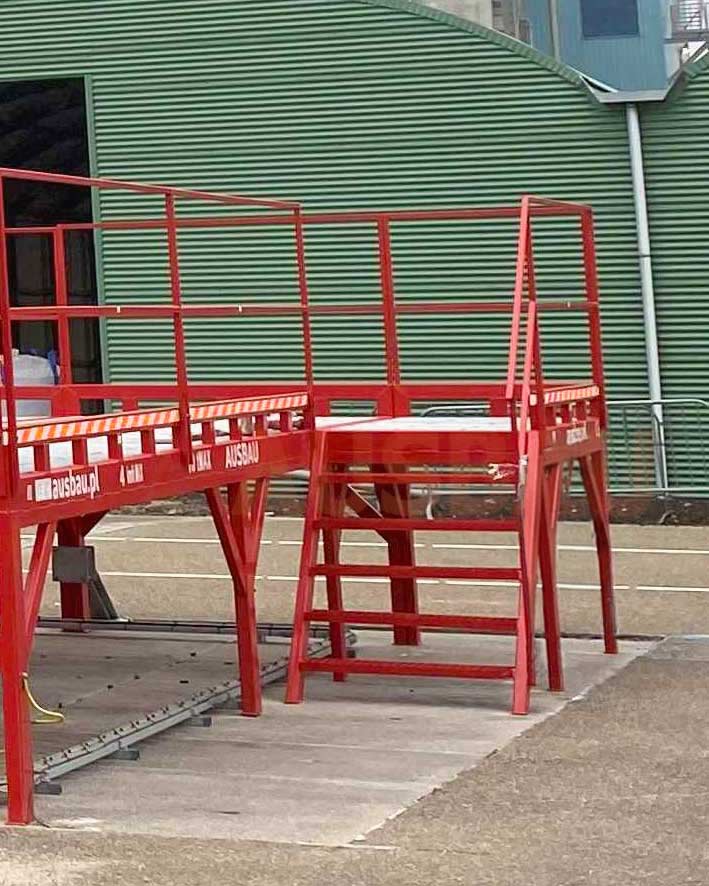
OPT-LD - ladder for pedestrians.
AUSBAU-HR
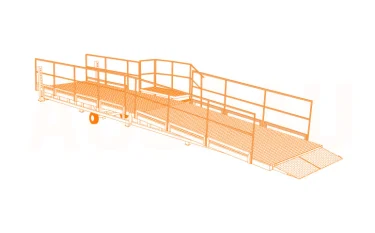
OPT-HR - additional protective hand railings, mountable.
AUSBAU-WL
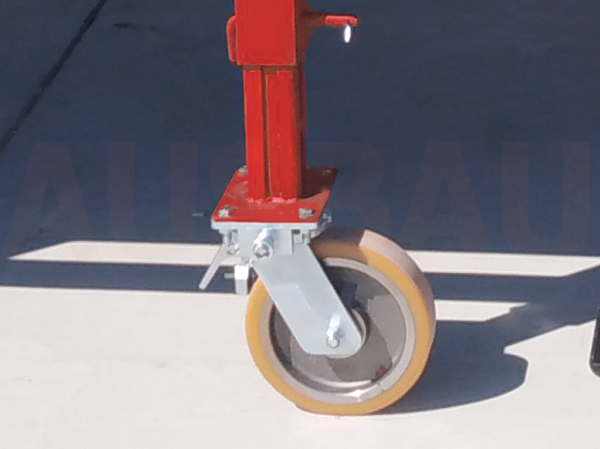
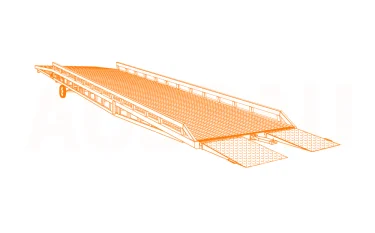
OPT-WL - pair of wheels for local small moving.
OPT-LDP - ladder with platform for pedestrians.
AUSBAU-TC
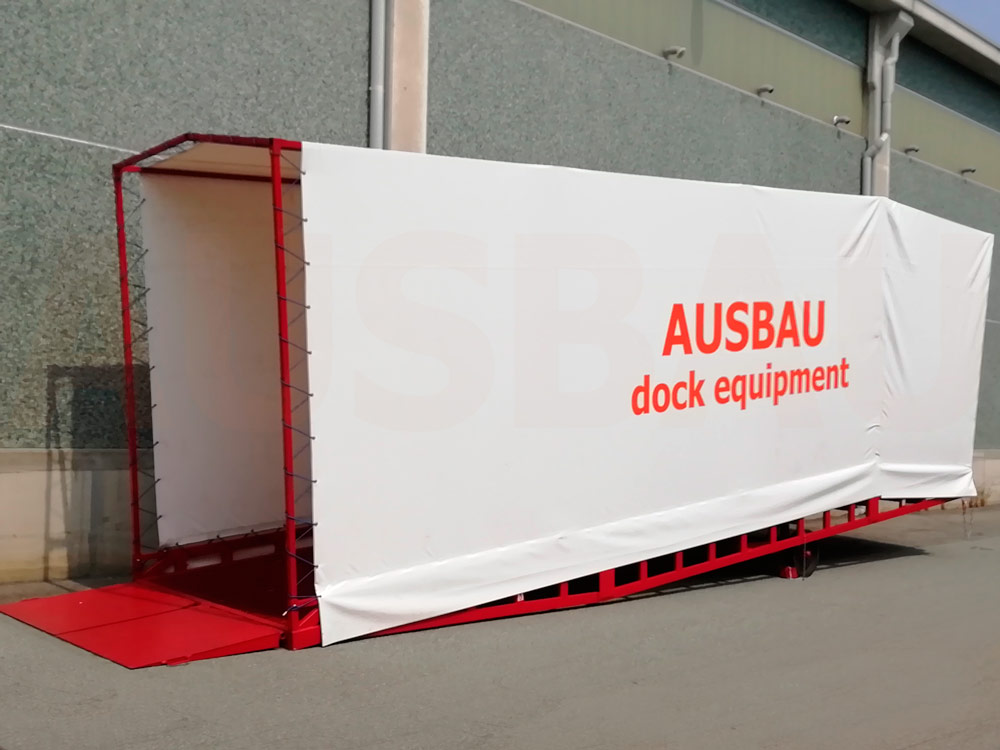
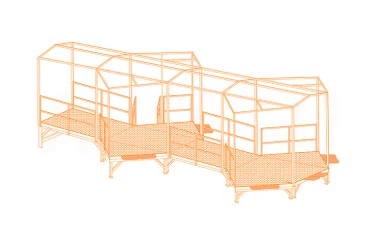
OPT-TC - tent сover over the ramp, mountable.
AUSBAU-CLR
OPT-CLR - different color.

You can see more photos in the gallery

FAQ

1. What is a loading ramp for vans and LCVs, and how does it work?
A loading ramp for vans and light commercial vehicle allows organising the loading and unloading of light commercial vehicles, the bed height of which differs from standard trucks and semi-trailers.

AUSBAU offers two solutions:
  • fixed loading ramp AUSBAU-VR – the van or LCV itself drives onto the ramp and rises to the level of a standard loading dock;
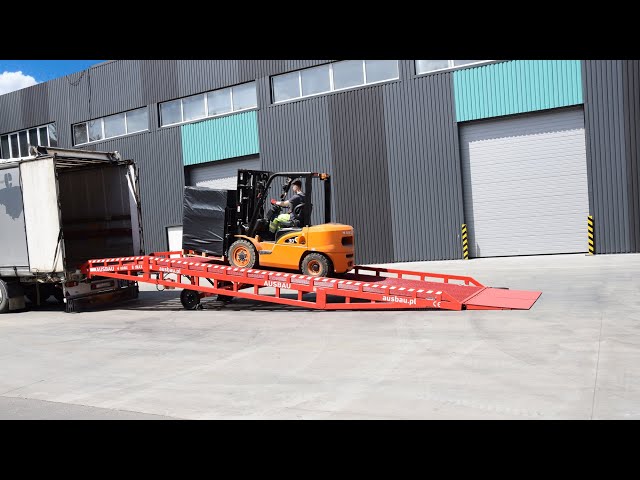
  • mobile ramp for vans and light commercial vehicle AUSBAU-MRVR8 – a forklift or other warehouse equipment moves along the ramp. Thanks to a working height range of 500-1400 mm, a single loading dock ramp can be used to work with vans and LCV, standard trucks, containers, and railway carriages.

Thus, LCV loading can be organised in two ways: raising the vehicle to the warehouse level or providing direct access for loading equipment into the truck bed.
2. What is the difference between a loading ramp for vans and a standard loading dock?
The main difference of the AUSBAU-VR fixed loading ramp is that the vehicle itself moves along the loading ramp, rather than a forklift. It compensates for the difference between the low loading height of a van or LCV and the level of a standard loading dock.

The design is adapted for vehicle movement:
  • working height – 550-650 mm;
  • usable width – 2350 mm;
  • slope angle – 5.74-8.36° depending on the model.

As a result, vans and LCVs can be serviced through standard warehouse gates designed for higher trucks.
3. How to choose a loading dock ramp for a van or light commercial vehicle (LCV)?
The main selection criterion is the loading organisation scheme.

If it is necessary to service LCVs through a standard loading dock, the fixed loading ramp AUSBAU-VR is used: the vehicle drives onto the ramp and rises to the warehouse level.

If a single ramp must be used with transport of different loading heights, a more versatile solution is the mobile ramp AUSBAU-MRVR. It allows the loading equipment to drive directly into the truck bed and is suitable for working with both LCVs and trucks, as well as other types of transport.

When choosing, one must also consider the dimensions and weight of the transport, the characteristics of the loading equipment, the available space, and the traffic organisation in the loading area.

4. How high is a loading ramp for a LCV?
The height of the loading ramp is chosen according to the actual loading height of the vehicle and the level at which loading is to take place.

For the AUSBAU-VR fixed loading ramp, the working height is 550-650 mm and is selected so that after the vehicle drives onto it, its bed is at the required level relative to the loading dock.

The universal mobile ramp AUSBAU-MRVR is adjustable in the range of 500-1400 mm, so its working height can be set directly to the bed height of the serviced transport.

When selecting a loading dock ramp, it is also necessary to consider the ground clearance, wheelbase, and the change in the vehicle's position depending on its load.

5. What are the standard size and capacity for loading dock ramps for LCV?
The dimensions of the loading dock ramp are selected considering the dimensions, wheelbase, and weight of the equipment that directly moves along the structure.

For the AUSBAU-VR fixed loading ramp, onto which a light commercial vehicle or minibus drives, a load capacity of 5 or 8 tons and a usable width of 2350 mm are provided. When selecting the load capacity, the maximum weight of the LCV with a load is considered.

The universal mobile ramp AUSBAU-MRVR is designed for a load capacity of 8 tons, has a usable width of 2260 mm, and a total length of 13380 mm. In this case, the load capacity is determined by the total weight of the loading equipment and the cargo it moves.

Thus, for the two structures, the load capacity is calculated differently: for the fixed VR – based on the vehicle with a load; for the mobile loading ramp – based on the forklift with a load.

6. How to safely load and unload a van using a loading ramp?
Before starting the loading process, it is necessary to check the correct installation and securing of the loading ramp for vans, the condition of the riding surface, and the suitability of the structure for the transport and equipment being used.

During operation, it is necessary to:
  • observe the permissible speed and avoid sudden acceleration, braking, and manoeuvres;
  • control the position of the wheels on the riding surface;
  • consider the permissible slope and ground clearance of the vehicle or forklift;
  • prevent movement of the transport during loading and unloading operations;
  • observe the specified load capacity for the loading dock ramp.

For the AUSBAU-VR fixed loading ramp, the correct entry and securing of the vehicle are especially important, as the van itself moves along the ramp. For the universal mobile ramp, it is necessary to ensure correct docking with the truck bed and set the working height before the forklift starts moving.
Ask a question
Please fill out the form or send a request to mail@av-exim.com

    Subscribe to the newsletter
    Ask a question
    Please fill out the form or send a request to mail@av-exim.com

      Subscribe to the newsletter
      Ask a question
      Please fill out the form or send a request to mail@av-exim.com

        Subscribe to the newsletter